Tips
Refundable Flight Tickets: Are They Worth It for Business Travel?
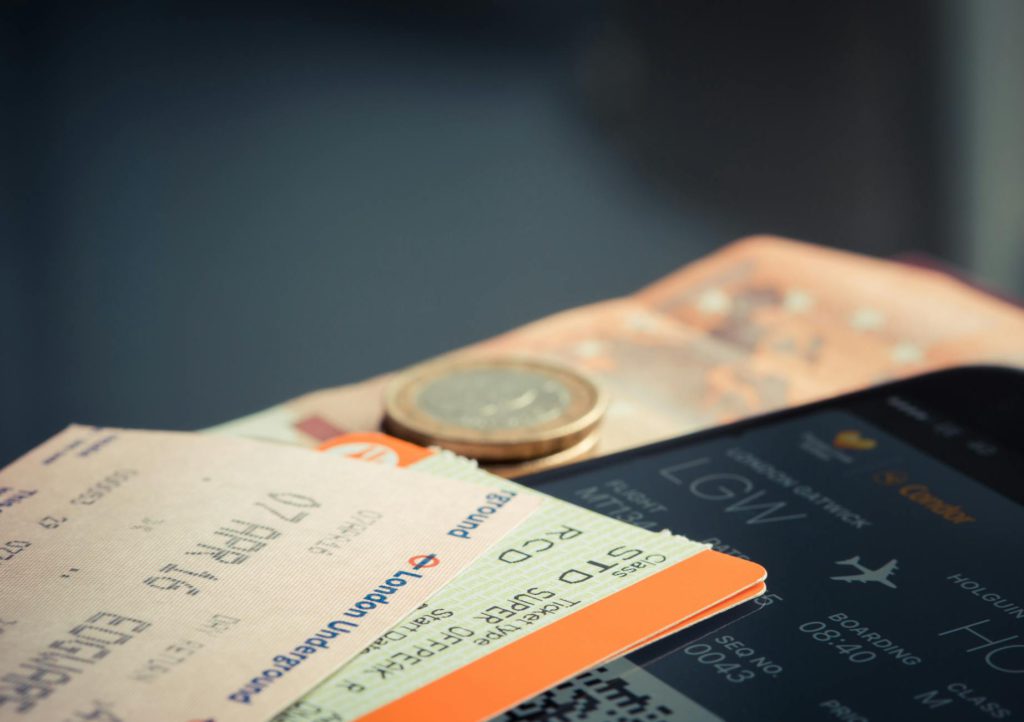
Every finance team has had the conversation. A trip gets cancelled the night before departure. The non-refundable ticket is lost. The business absorbs the cost and moves on until it happens again the following month, and the month after that. At some point, someone asks the obvious question: should we just be booking refundable tickets?
The answer, like most things in corporate travel management, is not a simple yes or no. Refundable flight tickets cost meaningfully more than their non-refundable equivalents, sometimes 30%, sometimes three times the price depending on the route, airline, and booking window. Blanket-booking refundable tickets for every business traveller in an organisation is rarely the right financial decision. But equally, blanket-booking non-refundable fares for every trip and absorbing the cost of inevitable cancellations is a policy built on false economy.
This guide gives you the complete picture on refundable flight tickets: what they are, how they work, which airlines offer the best policies, and how to decide when refundable fares are genuinely worth the premium for business travel.
What Is a Refundable Flight Ticket?
A refundable flight ticket is precisely what the name suggests: a fare that allows you to cancel your booking and receive the full ticket price back as a cash refund to your original payment method. Not a travel credit. Not a voucher with a 12-month expiry. Not a booking fee minus a cancellation charge. A genuine cash refund, typically processed within 7 to 10 business days, that returns the full value of the ticket to the card or account used to purchase it.
This distinction between cash refund and travel credit is more significant than it might appear. Many airlines describe fares as “flexible” or “changeable” when what they actually offer is a credit towards a future booking, often with restrictions on routes, dates, or fare classes that make the credit difficult to use in practice. A truly refundable ticket returns money, not credit.
Most refundable tickets also include the ability to change the flight date or route without a change fee, making them valuable not just for cancellations but for the itinerary flexibility that business travel routinely demands.
Fully refundable vs partially refundable
Within the category of refundable tickets, there is an important distinction between fully refundable and partially refundable fares.
A fully refundable ticket returns 100% of the ticket price if cancelled, regardless of when you cancel and regardless of the reason. These fares sit at the top of each airline’s fare hierarchy and command the highest price. They are most commonly found in business class and first class, and in the highest economy fare buckets on competitive routes.
A partially refundable ticket returns a portion of the ticket price if cancelled, with the remainder retained by the airline as a cancellation fee. The fee is stated in the fare rules at the time of booking and typically ranges from a nominal amount to a significant percentage of the total fare. Partially refundable tickets represent a middle ground between fully refundable and non-refundable fares and are worth careful consideration when the full refundable premium feels disproportionate to the actual risk of cancellation.
Non-refundable tickets — what you can still recover
It is worth clarifying that non-refundable does not necessarily mean total loss. Several important protections apply even to non-refundable fares that business travellers and travel managers should understand.
The 24-hour rule, mandated in the United States by the Department of Transportation, requires all airlines selling tickets in the US to offer a full refund on any ticket cancelled within 24 hours of booking, provided the flight departs at least seven days after the booking date. This applies regardless of fare class or the airline’s own cancellation policy. For international carriers operating US routes, compliance is required. This rule gives buyers a meaningful window to catch mistakes or change plans without penalty.
Under EU and UK regulations (EC 261/2004 and its UK equivalent), passengers are entitled to a full refund when an airline cancels a flight or makes a significant schedule change, regardless of fare type. A non-refundable ticket becomes fully refundable the moment the airline is responsible for the disruption. Understanding this right is important for travel managers reviewing claims; many cancelled trip costs are recoverable under passenger rights legislation that applies irrespective of the original fare class.
How Fare Classes Affect Refundability
Airline pricing is structured around fare classes; letter codes that determine not just price but the full bundle of conditions attached to a ticket, including refundability, changeability, and earning of frequent flyer miles. Understanding fare classes is essential for any travel manager who wants to make intelligent decisions about when to book refundable.
Most airlines use a broadly similar structure, though the specific codes vary by carrier:
Basic economy (O, G, N, or similar): The most restrictive fare available. Almost universally non-refundable, non-changeable, and non-upgradeable. These fares are appropriate only when the trip is certain, the timing is fixed, and no possibility of cancellation exists. For business travel, basic economy is rarely appropriate given the fluidity of corporate schedules.
Standard economy (Q, K, L, M, or similar): The workhorse of most corporate travel programmes. These fares are typically non-refundable but may offer the option to cancel for a credit or to change with a fee. They represent a reasonable balance of cost and flexibility for confirmed trips with low cancellation risk.
Flexible economy (Y or similar full-fare economy): Full-fare economy is almost always refundable and changeable without fees. These fares cost significantly more than standard economy, often approaching the price of discounted business class on competitive routes, and are most appropriate when flexibility is essential, and business class is outside policy.
Business class (J, C, D, I, or similar): Discounted business class fares (the lower buckets within the cabin) are often partially refundable with a fee. Full-fare business class (J or C class on most carriers) is typically fully refundable. For frequent long-haul travellers, the refundability of business class fares is one of the factors that justifies the premium for organisations that permit business class on routes above a specified flight time.
First class (F, A): Almost universally fully refundable on airlines that still operate true first class products. The volume of first class bookings in corporate travel is low enough that this is rarely a significant policy consideration.
The fare rules — the full legal conditions attached to a specific fare are available at the time of booking and should be reviewed before purchase, particularly for high-value tickets. They specify the exact refund amount, any cancellation deadlines, change fees, and any conditions that modify the standard refund (such as requiring cancellation a minimum number of hours before departure to qualify).
Refundable vs Non-Refundable: The Business Case
The decision between refundable and non-refundable fares for business travel is fundamentally a risk calculation, not a price comparison. The relevant question is not “how much more does the refundable ticket cost?” but “what is the expected cost of non-refundability given the realistic probability of cancellation on this type of trip?”
When non-refundable fares make sense
Non-refundable fares are appropriate, and often significantly more economical, when several conditions are true simultaneously.
The trip has a fixed, non-negotiable purpose. A flight booked for a regulatory deadline, a conference with a fixed date, or a client event that cannot be moved has a very low realistic probability of cancellation not zero, but low enough that the refundability premium rarely pays off statistically.
The route is well-served with frequent departures. On a route with eight or more daily departures, even if a trip needs to be changed, the cost of rebooking onto a different departure is manageable, and the original non-refundable ticket can often be credited against future travel. The effective cost of non-refundability on high-frequency routes is lower than on thin routes.
The ticket price is modest. The calculus on a £120 economy ticket is very different from a £1,800 long-haul business class fare. For low-value tickets, the refundability premium may exceed the ticket price itself, making it economically indefensible regardless of cancellation risk.
The booking window is short. Tickets purchased within seven days of departure on a confirmed trip have a lower cancellation probability than tickets purchased months in advance when plans are inherently more speculative.
When refundable fares are worth the premium
Refundable fares justify their cost when the conditions above are absent and particularly when any of the following apply.
The trip is contingent on external factors. Business development travel flights booked for pitches, negotiations, or client meetings that require the other party’s confirmation inherently have higher cancellation risk than internal travel. A partner decision to postpone, a deal that falls through, or a conflict on the client’s side can collapse a confirmed booking. Refundable fares hedge this risk appropriately.
The route is thin or the destination is difficult to reach. On routes with one or two daily departures, the consequences of missing a non-refundable flight or needing to change dates are significantly more expensive. The gap between the non-refundable fare and the next available option may be large enough to exceed the refundability premium on the original booking.
The ticket value is high. On long-haul business class fares priced above £1,500 to £2,000, the cost difference between a refundable and non-refundable fare is typically a smaller percentage of the total than on economy tickets, while the absolute value at risk from a cancellation is much larger. The expected value calculation almost always favours refundable at this price point.
The traveller has a history of disruption. Some roles, such as senior executives, client-facing advisors, and crisis response specialists, have cancellation rates that are measurably higher than the organisational average because their schedules are subject to last-minute changes by nature. A data-informed travel policy should reflect this variance rather than applying uniform rules regardless of travel pattern.
The trip involves multiple connecting flights. The more complex the routing, the higher the probability that some element of the itinerary requires modification. Refundable fares on multi-leg itineraries protect the cascading rebooking costs that can occur when a single segment change affects the entire journey.
When Company Travel Policy Should Mandate Refundable Fares
The most effective corporate travel policies do not apply a single blanket rule to all bookings they segment by trip type, ticket value, route characteristics, and traveller role to prescribe the appropriate fare type in each scenario. Here is a practical framework for when policy should mandate refundable.
Mandate refundable when ticket value exceeds a threshold. A common and defensible approach is to require refundable fares for any single ticket above a specified price, often in the range of £800 to £1,500, depending on the organisation’s risk tolerance and average ticket price. Below the threshold, the cost-benefit calculation typically favours non-refundable. Above it, the downside of a lost ticket is significant enough to warrant the premium.
Mandate refundable for speculative trips. Travel booked more than 60 to 90 days in advance, or for trips explicitly categorised as business development or pre-sales activity, should default to refundable given the inherently higher cancellation probability. A policy trigger based on trip purpose rather than just price is more precise than a price threshold alone.
Mandate refundable for senior travellers with unpredictable schedules. C-suite and senior leadership travel is disproportionately subject to last-minute cancellation. A policy that requires refundable fares for defined seniority levels acknowledges this reality and removes the administrative burden of ad-hoc exceptions.
Consider mandatory refundable for certain routes. Thin international routes with limited frequency, particularly destinations served by one or two weekly departures, carry a higher rebooking risk that may warrant a default refundable policy regardless of other factors.
Build in a review cycle. Cancellation data should be reviewed quarterly to assess whether policy assumptions remain accurate. If a particular trip type or route is seeing frequent non-refundable ticket losses, the policy should be adjusted. Travel policy is a living document, not a set-and-forget configuration.
Which Airlines Offer the Best Refund Policies?
Refund policies vary significantly between airlines and fare classes. The following reflects the general approach of major carriers on business routes.
Airlines generally regarded as having strong refund policies
British Airways offers fully refundable fares across its business class (Club World) at full-fare J/C class and provides flexible rebooking options on most flexible economy fares. Their Executive Club status also provides enhanced flexibility on standard fares for frequent flyers.
Lufthansa is generally considered among the more passenger-friendly European carriers for refunds and changes on business class fares. Their Business Flex fare explicitly includes full refundability and unlimited date changes without fees.
Singapore Airlines has a strong reputation for fair refund processing and offers fully refundable business and first class fares with clearly documented fare rules. Their online refund request process is considered relatively straightforward among Asian carriers.
Emirates offers full refundability on its Flex and Flex Plus economy fare tiers, and on business class at full fare. Their refund processing is generally reliable for direct bookings, though third-party booking refunds can take longer.
Delta, United, and American Airlines all eliminated most change fees on domestic and short-haul international economy tickets in 2020 and have largely maintained this policy. True cash refunds still require a refundable fare class, but the practical flexibility on changeable tickets has improved substantially compared to pre-2020 policies.
Important caveats for business travel bookings
Airline refund policies apply to tickets purchased directly through the airline or through a recognised corporate travel channel. Tickets purchased through OTAs (online travel agencies) are subject to the OTA’s own refund and cancellation process, which may impose additional fees or delays beyond the airline’s own policy. For corporate travel programmes, booking through a managed platform or travel management company that has direct relationships with airlines provides the cleanest path to refund processing.
When booking through a corporate travel management platform such as Clooper, refund requests on applicable fares are handled through the platform’s operations team, who manage the process with the airline on the traveller’s behalf — removing the administrative burden from the individual and ensuring refunds are tracked and reconciled against the original expense claim.
How to Handle Refunds in a Corporate Travel Programme
The mechanics of claiming a refund on a business travel ticket are straightforward in theory and more complex in practice, particularly at scale. Here is how a well-managed corporate travel programme should handle refunds.
Establish a single channel for refund requests
Refund requests made by individual travellers directly to airlines, particularly on international routes, are inconsistently processed and difficult to track at an organisational level. A corporate travel programme should route all refund requests through a single channel, whether a dedicated internal travel team, a travel management company, or a corporate booking platform. This centralises visibility, ensures compliance with airline deadlines for refund eligibility, and creates an audit trail that finance teams can reconcile.
Track non-refundable ticket losses
Most organisations have no systematic visibility of how much money they lose annually to non-refundable tickets on cancelled trips. This number, once measured, is almost always higher than leadership expects, and it is the most compelling data point for building the case for a more thoughtful refundability policy. Corporate travel platforms that integrate booking with expense data can surface this figure automatically.
Distinguish between refunds and credits
When a non-refundable ticket is cancelled, airlines typically offer a travel credit valid for a specified period. These credits are frequently lost, either because the traveller forgets about them, because the route is not flown again within the validity period, or because the credit is attached to an individual’s loyalty account rather than the corporate billing account. A well-managed programme tracks outstanding credits centrally and ensures they are applied to future bookings before expiry.
Align refund policy with expense policy
A refund claim from a traveller who paid for their ticket on a personal card and is awaiting reimbursement is a different process from a refund on a centrally billed corporate card. Travel policy should specify which payment method is used for different ticket types and ensure the refund route matches the original payment method, otherwise refunds can be processed to a personal account when the original expense was claimed from the company, creating a reconciliation problem.
Clooper’s platform manages this by centralising booking and payment through the corporate account, so refunds when they occur are processed back to the company rather than to individual traveller accounts, and the full lifecycle of the expense — booking, travel, cancellation, refund, is visible in a single system.
Refundable Tickets and Duty of Care
There is a duty of care dimension to the refundable ticket question that is sometimes overlooked in policy discussions focused purely on cost.
When an employee cannot travel, due to illness, a family emergency, a mental health crisis, or a security situation at the destination, the ability to cancel and recover the ticket cost without financial penalty removes one source of pressure from an already difficult situation. An employee who knows their employer will lose £1,400 on a non-refundable long-haul ticket if they call in sick the morning of departure is an employee who may feel pressured to travel when they should not.
This is not a hypothetical concern. Research on employee wellbeing in high-travel roles consistently identifies financial pressure around travel disruptions as a contributing factor to presenteeism and to decisions to travel despite illness or personal emergency.
A travel policy that mandates refundable fares for high-value tickets is, among other things, a duty of care decision, one that signals to employees that their wellbeing is valued over the sunk cost of a ticket. This framing can be useful when making the internal case for a more refundable-friendly policy to finance stakeholders who are focused primarily on the premium cost.
Frequently Asked Questions
What is the difference between a refundable and a flexible flight ticket?
These terms are sometimes used interchangeably, but they are not always the same thing. A refundable ticket guarantees a cash refund to your original payment method if you cancel. A flexible ticket usually means the date or route can be changed without a fee, but cancellation may result in a credit rather than a cash refund. When booking for business travel, check the fare rules specifically for the word “refund” rather than relying on terms like “flexible” or “changeable”; the distinction matters if you need to cancel entirely.
Are business class tickets always refundable?
Not automatically. Business class cabins contain multiple fare buckets at different price points, and the lower-priced discounted business class fares (sometimes called “saver” business fares) are often partially refundable or non-refundable. Full refundability is typically found in the full-fare business class bucket, which is the most expensive option within the cabin. Always check the fare rules for the specific booking class rather than assuming cabin class determines refundability.
What happens to a non-refundable ticket if the airline cancels the flight?
Under EC 261/2004 (applicable to EU and UK departing flights, and EU/UK carrier arrivals) and US DOT rules, passengers are entitled to a full cash refund on any ticket, including non-refundable fares, when the airline cancels the flight, makes a significant schedule change, or causes a significant delay. The non-refundable conditions in the fare apply to voluntary cancellations by the passenger, not to airline-initiated disruptions. This right is frequently not proactively communicated by airlines and should be claimed directly by the passenger or their travel manager.
How long does a flight ticket refund take to process?
For direct airline bookings on refundable fares, most airlines process refunds within 7 to 10 business days from the date of the request, though international routes and certain airlines can take up to 20 business days. Refunds on bookings made through travel agencies or OTAs may take longer because the refund must pass through the intermediary’s own processing system before reaching the original payment method. Corporate travel platforms with direct airline relationships can often accelerate refund processing compared to third-party booking channels.
Should our company always book refundable tickets for business travel?
Almost certainly not; a blanket refundable policy regardless of trip type or ticket value will cost most organisations more in premium than they recover through refunds. The right approach is a segmented policy: non-refundable for low-value, high-confidence, short-notice trips on well-served routes; refundable (or required refundable) for high-value tickets, speculative trips, senior traveller bookings, and complex multi-leg itineraries where cancellation risk is meaningfully higher.
Summary: Getting Refundable Ticket Policy Right
Refundable flight tickets are not the right choice for every business trip, and they are not the wrong choice for every business trip. The organisations that manage this decision well are those that have replaced a blanket rule, “always book the cheapest fare” or “always book refundable for anything over a certain price,” with a risk-informed framework that reflects the actual cancellation patterns of their business.
The key variables are ticket value, trip purpose, booking lead time, route frequency, and traveller role. A travel policy that builds these factors into the decision logic, and that measures non-refundable ticket loss as a KPI rather than an accepted cost of doing business, will consistently outperform one that treats fare selection as a simple cost optimisation problem.
Clooper’s corporate travel management platform gives travel managers the tools to build and enforce exactly this kind of policy: fare rules and refundability requirements configurable by trip type and traveller, centralised refund tracking and credit management, and the expense data visibility needed to understand what non-refundable ticket losses are actually costing the organisation.