Tips
How to Prepare for a Long Flight: 25 Expert Tips
Long-haul travel is one of the most demanding things you can put your body through in the course of everyday life. Whether you are crossing continents for a critical business meeting or finally taking the international trip you have been planning for years, hours confined to a pressurised cabin operating at 35,000 feet can leave you dehydrated, stiff, mentally foggy, and completely out of sync with your body clock.
The pressure drop alone reduces blood oxygen saturation by around 5–6% compared to sea level. Combine that with humidity levels below 20% drier than most deserts; recycled air, prolonged physical inactivity, disrupted sleep cycles, and the psychological fatigue of being in an enclosed space for 10 to 14 hours, and it becomes clear why so many travellers arrive feeling significantly worse than when they departed.
But the difference between arriving drained and arriving ready is almost entirely determined by how well you prepared before you boarded. In this guide, you will find 25 practical, expert-backed tips on how to prepare for a long flight structured as a timeline from the week before you travel to the moment you land.
Quick answer: To prepare for a long flight, book an aisle or window seat early, pack a carry-on kit with a neck pillow, earplugs, and an eye mask, wear loose comfortable clothing, download entertainment offline, stay hydrated before boarding, and plan how you will sleep or work during the journey. The sections below break each step down in detail.
Before You Fly: Preparation Steps (1 Week to 24 Hours Out)
The majority of the work that makes a long flight comfortable happens before you set foot in the airport. Use this phase to make deliberate decisions about your seat, your kit, your body, and your mindset.
1. Choose the Right Seat
Seat selection is one of the highest-leverage decisions you can make before a long-haul flight, and most travellers leave it to chance. The seat you end up in determines how freely you can move, how well you sleep, and how much control you have over your environment for the next 10 to 14 hours.
Aisle seats offer the most practical comfort for long-haul travel. You can stand and stretch without climbing over other passengers, visit the bathroom freely, and walk to the galley to request water or a snack without disturbing your row. This freedom to move is particularly important for reducing DVT risk and managing the restlessness that sets in after the first few hours.
Window seats are ideal if your priority is sleep. You have a solid surface to lean against, you will not be disturbed by others needing to pass, and you have slightly more control over the window shade and your personal light environment. The trade-off is that leaving your seat requires waking or climbing past one or two other passengers.
Avoid bulkhead seats unless you have a specific reason to choose them. While the extra legroom looks appealing in the seat map, bulkhead rows often have fixed armrests that prevent you from raising them to lie across seats on quieter flights, and the additional foot traffic in that zone means more disturbance. Similarly, seats in the last few rows before the rear galley typically do not recline and are close to the toilet queue.
2. Book a Direct Flight Where Possible
Every connection adds a layer of complexity, stress, and physical demand to a long-haul journey. You are asking your body to adapt to take-off and landing twice, spending additional hours in airport terminals often in a different time zone managing the anxiety of tight connections and the risk of missed flights or lost luggage in transit.
If budget allows, a non-stop long-haul flight is almost always worth the premium. You board once, you land once, and you arrive at your destination with a clear and predictable journey behind you. For business travellers where arriving rested and on time is non-negotiable, this consideration should factor into the travel booking decision from the outset.
3. Pack Your Carry-On Kit Strategically
Your carry-on bag is your survival kit for everything a long-haul flight throws at you, and packing it thoughtfully the night before departure is far better than grabbing things in a rush on the morning of travel. Think of it in terms of the problems you will encounter: dryness, noise, cold, boredom, stiffness, and the need to sleep. Each item in your kit should solve one of these problems.
Comfort essentials:
- Noise-cancelling headphones or high-quality silicone earplugs
- A travel pillow (memory foam compresses well; inflatable is lighter but less comfortable)
- An eye mask with a contoured shape that does not press against your eyes
- A lightweight travel blanket or large merino wool scarf that doubles as a layer
- Compression socks — wear them from the moment you board
Health and skin:
- A reusable water bottle to fill once through security (500ml minimum)
- Facial moisturiser and lip balm you can apply within the first hour of boarding before your skin begins to dry out noticeably
- Eye drops (preservative-free artificial tears) if you wear contact lenses or have dry eyes
- All prescription medication in your carry-on bag, never in checked luggage because lost bags happen, and you cannot replace a prescription mid-trip
- Pain relief such as ibuprofen or paracetamol
Entertainment and work:
- Device fully charged with all content downloaded offline before you leave home
- Portable power bank though not all long-haul seats have USB ports, and even those that do are often slow or unreliable
- A notebook and pen for analogue thinking, meeting prep, or notes that do not require a screen
Snacks:
- Protein bars, nuts, or trail mix to supplement airline meals
- Avoid strongly scented food out of consideration for your row
4. Download Everything Offline Before You Leave Home
In-flight Wi-Fi has improved significantly in recent years, but it remains expensive, inconsistent, and frustratingly slow at the moments you need it most. Most typically during the first hour of the flight when everyone on board is trying to connect at once. Treating the flight as a connectivity blackout and preparing accordingly removes the frustration entirely.
Before departing, download everything you might want to watch, listen to, or read: films and series on Netflix, Disney+, or your airline’s app, podcasts for the quiet stretches, playlists for focus or sleep, and audiobooks if that is how you prefer to pass time.
For first-time business travellers, this step is not optional; it is essential. Download every document, presentation, report, and email thread you might need to reference or work on during the flight. Save them to a local folder accessible from your desktop, not just a cloud shortcut that requires an internet connection to open. Create a simple offline task list before you board so you can move through work without needing to decide what to do next. Decision fatigue at altitude is very real.
5. Wear the Right Clothing
The clothes you board in are one of the easiest things to control and one of the areas travellers most consistently get wrong. Tight jeans, a stiff collar, a belt, pointed shoes, or a structured blazer are appropriate for an office but genuinely uncomfortable over a 12-hour flight.
Choose loose, breathable fabrics; linen, cotton, and technical travel clothing all work well. Layers are essential because cabin temperature varies widely depending on your position in the aircraft, the time of day, and how the airline manages climate control. What feels comfortable during boarding often becomes uncomfortably cold three hours into the flight and vice versa.
Slip-on shoes make security faster and allow you to remove them comfortably in your seat. Compression socks worn from the start replace any footwear function you lose by removing your shoes. If you are travelling for a business meeting and want to arrive looking professional, pack a change of clothes in your carry-on and change at the airport after landing rather than sitting in a suit for 14 hours.
6. Pre-Hydrate in the 24 Hours Before the Flight
Most people know they should drink water on the flight. Far fewer consider that arriving at the airport already dehydrated, as many people do after a rushed morning or a poor night of sleep means you are playing catch-up from the moment you board.
In the 24 hours before your flight, increase your water intake meaningfully. Aim for at least 2.5 to 3 litres across the day. Reduce alcohol and caffeine, both of which accelerate fluid loss and are already amplified in their dehydrating effects at altitude. Avoid heavily salted foods in the day before travel. The payoff is that you begin the flight from a position of hydration rather than deficit, and your skin, concentration, and circulation all benefit significantly over the journey.
7. Check In Online and Organise Your Documents
Online check-in typically opens 24 to 48 hours before departure. Completing it early allows you to lock in your preferred seat, select meal preferences if available, and access your boarding pass without queuing at an airport kiosk. Save your boarding pass to your phone’s wallet app and photograph it as a backup; digital boarding passes occasionally fail to load in poor signal areas of the terminal.
For international travel, check your passport expiry date well before departure. Many countries require at least six months of validity beyond your travel date. Verify visa requirements for your destination and any transit countries in your itinerary transit visa requirements are frequently overlooked and can prevent boarding. Keep all travel documents from boarding pass, passport, travel insurance, visa confirmation, hotel address- in a single document folder or travel app so you are not searching for them under pressure.
8. Adjust Your Sleep Schedule in Advance
Jet lag is not something that simply happens to you on arrival; it is a process your body begins before you board and that you can meaningfully influence through deliberate preparation. The mechanism is straightforward: your circadian rhythm is anchored to the light-dark cycle at home, and crossing multiple time zones forces it to resynchronise with a different cycle.
Starting two to three days before a long-haul flight to a significantly different time zone, begin shifting your sleep and wake times toward your destination. If you are travelling east (where you will need to sleep earlier), go to bed 45 to 60 minutes earlier each night. If travelling west, push your bedtime later by the same amount. The total adjustment across three days of one hour each direction is modest but genuinely meaningful; you arrive partway adapted rather than starting from zero.
At the Airport: What to Do Before Boarding
The airport phase is frequently underused as a preparation opportunity. Most travellers either wait passively at the gate or browse the shops. Approaching it intentionally can significantly improve how you feel when you board.
9. Arrive Early and Move Around Deliberately
Arriving with generous time before boarding removes the stress cortisol spike that comes from rushing, and that spike directly affects your ability to sleep in the early hours of the flight, precisely when you most want to. For international long-haul departures, arriving three hours before the scheduled departure is standard. If your airport is large or your airline’s check-in processes are known to be slow, factor this in accordingly.
Once through security, use the time to walk. Most major international terminals are large enough to accumulate 20 to 30 minutes of walking if you traverse them deliberately. This movement primes your circulation before the sedentary hours ahead, uses up some of the restless energy that makes the first few hours of a long flight uncomfortable, and is simply more restorative than sitting in a gate chair staring at your phone.
10. Eat a Balanced, Substantial Meal Before Boarding
Airline food has improved considerably on many long-haul carriers, but it is rarely nutritious enough, timed well enough, or abundant enough to rely on as your sole source of fuel for a 12-hour journey. Meal service timing also depends on the flight’s schedule; a late departure means your first hot meal arrives in the middle of what is supposed to be your sleep window, disrupting your rest before it has started.
Eat a proper meal before boarding. Something with balanced macronutrients protein, complex carbohydrates, and vegetables- will sustain you better and more steadily than airport fast food. Avoid heavy, greasy, or gas-producing foods such as beans, lentils, cruciferous vegetables, and carbonated drinks. Cabin pressure causes gas to expand by approximately 25% compared to ground level, making bloating and discomfort significantly more pronounced in the air than it would be on the ground.
11. Use Lounge Access If You Have It
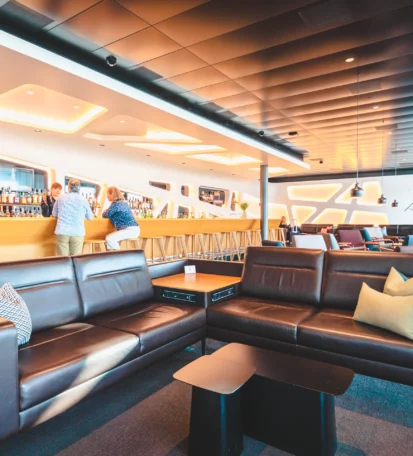
Business class tickets, many premium travel credit cards, and dedicated lounge membership programmes (Priority Pass, Lounge Key, and airline-specific programmes) provide access to airport lounges. If you have any form of lounge access, use it on long-haul departures without exception.
Lounges offer shower facilities that allow you to board feeling fresh rather than travel-worn, consistently better food than the departures terminal, reliable and fast Wi-Fi for last-minute work, and quiet seating away from the noise and crowds of the main terminal. A 90-minute lounge visit before a 12-hour flight is one of the most effective investments you can make in your arrival condition.
12. Limit Alcohol Before and During the Flight
The common assumption that a drink before or during a long flight helps you sleep is largely a myth backed by a misunderstanding of what alcohol actually does to sleep quality. Alcohol is a sedative; it helps you fall asleep faster, but it significantly reduces the quality and restorativeness of the sleep it produces, suppressing REM sleep and causing you to wake more frequently in the second half of the night.
At altitude, alcohol’s dehydrating effects are amplified, and its impact on sleep architecture is more pronounced due to the already disrupted circadian context of a long-haul journey. If you enjoy a drink in the lounge or with a meal on board, there is no reason to abstain entirely, but limiting yourself to one drink and matching it immediately with at least 250ml of water is a meaningful practical step.
During the Flight: Staying Comfortable and Healthy
Once you are in your seat, your goal shifts to active management of your body and environment. The passengers who arrive in the best condition are not those who simply endure the journey; they are those who manage it deliberately.
13. Move and Stretch Every 90 Minutes
Deep vein thrombosis is a blood clot that forms in the deep veins of the legs, typically the calf or thigh, as a result of prolonged immobility. It is a genuine medical risk on long-haul flights, not a theoretical one. Blood pools in the lower extremities when leg muscles are inactive for hours, particularly in the compressed sitting position of an economy seat. In most cases the clot dissolves naturally, but in serious cases it can migrate to the lungs and cause a pulmonary embolism.
The most effective prevention is movement. Set an alarm on your watch or phone for every 90 minutes from the moment you reach cruising altitude. When it goes off, stand up, walk to the rear galley or towards the front of the cabin, and do a brief sequence of ankle rotations, calf raises, and forward bends. Even two to three minutes of movement is sufficient to meaningfully restore circulation. Wearing compression socks throughout the flight provides continuous circulatory support between movement intervals.
If you have a personal or family history of blood clots, are taking the contraceptive pill, have recently had surgery, or have been advised by a doctor about clotting risk, speak with your GP before any long-haul flight and discuss whether additional precautions or medication are appropriate.
14. Sleep Strategically and Deliberately
The ability to sleep well on a long-haul flight is not a talent some people naturally have and others do not, it is a skill that responds to preparation. The passengers you see sleeping soundly within an hour of boarding almost universally brought the right equipment, chose the right seat, timed their sleep attempt correctly, and created a conducive environment for themselves.
Set your watch to the destination time zone the moment you board, this simple act is a psychological anchor that helps your body start orienting towards the new rhythm. If it is daytime at your destination, resist sleeping in the first half of the flight even if you feel tired. If it is night-time at your destination, prioritise sleep from boarding.
Put your eye mask on, insert your earplugs or put on your noise-cancelling headphones, bring your seat to the most reclined position available, and deploy your neck pillow before you feel tired rather than waiting until you are fighting to sleep. The environment needs to be ready before the sleep window arrives.
Melatonin taken at the destination’s bedtime, between 0.5mg and 3mg is the evidence-supported range and is one of the most researched and widely recommended interventions for jet lag and in-flight sleep. It works by signalling to your body that it is time to sleep in the new time zone, and unlike prescription sleep medication, it does not impair cognitive function on waking.
15. Drink Water Consistently Throughout the Flight
At cruising altitude, you lose water through respiration and skin at a significantly higher rate than on the ground, but the sensation of thirst is often blunted by the pressurised environment, meaning you do not feel the urge to drink until you are already meaningfully dehydrated. Do not wait for thirst, use the flight structure to keep drinking.
Drink a full cup of water every time the cabin crew pass with the drinks trolley and request a bottle of still water each time they come through the aisle. Your reusable bottle, filled before boarding, gives you independent access to water between service rounds. Avoid relying on the small plastic cups provided with meals, they hold approximately 150ml, which is far too little given the rate of fluid loss at altitude. Caffeinated drinks consumed on board count partially against your hydration because caffeine has a mild diuretic effect; balance every coffee or tea with an additional glass of water.
16. Moisturise Your Skin and Protect Your Eyes
The dehydrating effect of cabin air is not limited to what you feel internally; it is visible on your skin within hours of boarding and noticeable in your eyes well before the flight is over. Most frequent long-haul travellers apply moisturiser before and during the flight as a matter of routine rather than comfort.
Apply facial moisturiser and lip balm within the first hour of boarding, before your skin begins to feel dry. Reapply again mid-flight on journeys over eight hours. If you wear contact lenses, consider switching to glasses for the journey, lenses become increasingly uncomfortable in dry cabin air, and the risk of eye irritation increases significantly over a long flight. Preservative-free artificial tear eye drops are helpful if your eyes feel sore or gritty.
17. Manage Ear Pressure Proactively
The pressure changes during ascent and descent cause the air in the middle ear to expand and contract. When the Eustachian tube, which connects the middle ear to the back of the throat, fails to equalise this pressure adequately, you feel discomfort or pain. For most passengers this resolves naturally through swallowing, yawning, or chewing gum. For others, particularly those flying with a cold or sinus congestion, it can be genuinely painful and occasionally causes temporary hearing loss.
EarPlanes are filtered earplugs that slow the rate of pressure change reaching the middle ear, giving the Eustachian tube more time to equalise. They are widely available at pharmacies and most airport shops and are worth packing if you have had ear discomfort on flights before. If you are flying with a cold or blocked sinuses, a nasal decongestant spray used approximately 30 minutes before descent is an effective preventive measure. Consult a pharmacist before your flight if you are unsure which product is appropriate.
18. Manage Screen Time and Protect Your Eyes
Screens on long-haul flights present a particular challenge because they are typically used in a dark cabin for extended periods with reduced blinking, a combination that causes significant eye strain. The blue light emitted by screens also suppresses melatonin production, which is counterproductive if you are trying to sleep later in the flight.
Enable night mode or warm colour temperature on your screen before boarding. Reduce brightness to the lowest setting that remains comfortable. Follow the 20-20-20 rule if you are doing extended screen work: every 20 minutes, look at something approximately 20 feet away for 20 seconds to allow your eye muscles to relax. Alternate screen use with audio-only content, podcasts, music, or audiobooks, for portions of the flight, particularly in the hours before your planned sleep window.
19. Use Noise-Cancelling Headphones from the Moment You Board
Engine noise on a long-haul aircraft is sustained, broad-spectrum, and sits at a frequency range that is particularly fatiguing to human hearing, typically between 50 and 400 Hz for the low-frequency rumble. At cruising altitude, the ambient noise level inside the cabin is approximately 80 to 85 decibels, comparable to a busy urban street. Sustained exposure over 10 to 12 hours depletes energy in ways that passengers typically attribute to the flight itself rather than the noise.
Noise-cancelling headphones work by generating an inverse sound wave that neutralises the ambient frequencies around you. Even worn without playing any audio, they reduce the cognitive load of the environment significantly. With music, a podcast, or white noise playing, they create a genuinely comfortable acoustic environment that makes rest dramatically easier. This is one of the single most impactful purchases a frequent long-haul traveller can make.
Preparing for a Long Flight as a Business Traveller
Note for Clooper: This section is the unique angle that differentiates this article from every generic travel blog covering the same keyword. No competitor frames long-haul flight preparation around corporate performance. Keep the Clooper references natural and value-adding rather than promotional.
Business travel has unique demands that generic travel guides do not account for. Arriving comfortable is necessary but not sufficient, you need to arrive ready to perform. That means protecting your decision-making capacity, protecting your productivity in the air, and planning your arrival around the professional commitments waiting for you on the ground.
20. Protect Your In-Flight Productivity
A long-haul flight is simultaneously one of the most uninterrupted blocks of time available to a business traveller and one of the most cognitively demanding environments in which to attempt focused work. Managing this tension requires a structured approach rather than hoping you will figure it out once airborne.
Before boarding, create a simple task list specifically for the flight: two or three high-focus tasks for your sharpest hours immediately after take-off, lighter reading or administrative tasks for the middle portion of the flight, and a review of your agenda and meeting preparation for the final hour before landing. Download every file you will need locally on your device — not just cloud shortcuts, but actual downloaded copies stored offline.
Communicate your in-flight status to your team before you leave. Let key contacts know when you will be unreachable and when they can expect responses. Use your email client’s scheduled send function to queue messages timed for when you land. This preparation removes the anxiety of disconnection and allows you to work offline with genuine focus rather than half-concentration.
21. Know Your Company Travel Policy Before You Fly
Out-of-policy travel spend is one of the most common and preventable sources of friction in corporate travel management. It creates administrative delays on return, complicates expense approval, and can result in employees bearing costs that should have been covered by the company. The time to understand your travel policy is before you depart, not after you have incurred the expense.
Review your company’s policy on the class of travel permitted for long-haul routes, many organisations permit business class for flights over a specified number of hours, which is worth knowing if you are currently booking economy on a 12-hour route. Understand meal allowances for layovers and transit periods, approved accommodation providers at your destination, and the process for claiming any out-of-pocket expenses incurred during travel.
Clooper’s corporate travel management platform builds policy compliance into the booking process directly, so travellers see only options that fall within their approved parameters rather than booking freely and hoping for approval after the fact. This removes the policy burden from the individual traveller and the approval burden from the finance team simultaneously.
22. Plan Your Arrival Around Performance Requirements
This is the preparation step that most business travellers skip and it is the one that most directly determines whether the trip is a success. The assumption that you can simply adapt to a new time zone on arrival and perform at full capacity from the first morning is one that experienced frequent flyers have learned to be deeply sceptical of.
Consider the demands of your first 24 to 48 hours at your destination and plan the flight accordingly. If your most important meeting is on the morning after arrival, your flight preparation should be entirely focused on maximising sleep during the journey. If you have a full day before significant engagements, you have more flexibility. If possible, advocate within your organisation for a buffer day before critical meetings on long-haul trips, the additional hotel cost is consistently justified by the quality of the performance it enables.
Arrive with a clear understanding of where you are going. Have your hotel address saved offline, your ground transport arranged before landing (pre-booked transfers are less stressful than negotiating with taxi drivers after a 14-hour flight), and your itinerary reviewed so you can move immediately and efficiently on arrival.
23. Track Expenses in Real Time
Long-haul business travel generates expense claims across multiple categories: airport meals, lounge access where self-funded, transport to and from airports, checked baggage fees, in-flight purchases, and incidentals at the destination. The most common mistake is leaving expense tracking until the end of the trip, by which point receipts are lost, amounts are misremembered, and the administrative task of reconstruction adds stress to an already demanding schedule.
Log expenses as they occur. Photograph receipts immediately after purchase. Use your company’s approved expense tool, or Clooper’s integrated platform, to capture spend in real time rather than in a post-trip reconciliation session. This discipline takes two to three minutes per expense and saves hours of administrative work on return.
Long Flight Essentials: Complete Packing List
Use the list below when preparing your carry-on for any long-haul journey. Everything here fits in a standard cabin bag alongside your device and a change of clothes.
Comfort
- Neck pillow (memory foam or inflatable)
- Eye mask (contoured)
- Noise-cancelling headphones
- Light travel blanket or large merino scarf
- Compression socks — put them on before boarding
- Slip-on shoes or flight socks for use in your seat
Health and hygiene
- Reusable water bottle (500ml minimum)
- Facial moisturiser and lip balm
- Toothbrush and mini toothpaste
- Preservative-free eye drops
- All prescription medication
- Melatonin if crossing time zones
- Ibuprofen or paracetamol
- Nasal decongestant spray if travelling with a cold
- EarPlanes if prone to ear discomfort
Entertainment and productivity
- Device fully charged
- Charger cable
- Portable power bank
- All content downloaded offline (films, podcasts, playlists, documents)
- Notebook and pen
Snacks
- Protein bars or nuts
- Dried fruit
- Avoid anything strongly scented
Travel documents
- Passport (valid for 6+ months beyond travel date)
- Boarding pass (digital and paper backup)
- Visa or entry documentation
- Travel insurance details
- Hotel address and confirmation (saved offline)
- Ground transport confirmation
After Landing: Recovery Tips
24. Commit to the Destination Time Zone Immediately on Arrival
The speed at which you recover from jet lag is almost entirely determined by how quickly you commit to the behavioural rhythms of the new time zone, eating, sleeping, and waking at local times rather than continuing to follow your body’s existing rhythm.
On arrival, go outside into natural daylight as soon as possible. Sunlight exposure is the most powerful signal available to your circadian system and resets your internal clock faster than any supplement or technique. Eat meals at local times regardless of what your body is telling you. Stay awake until a reasonable local bedtime, typically 9:30 to 10:30 pm at your destination, even if you feel exhausted. The discomfort of staying awake through the afternoon slump is worth the faster resynchronisation it produces. Use melatonin at your destination’s bedtime on the first one to two nights if you have not already taken it during the flight.
25. Rehydrate and Eat a Proper Meal Before Anything Else
The physiological priority immediately after a long-haul flight is rehydration. Your body has spent 10 to 14 hours in a dehydrating environment while simultaneously managing the demands of disrupted sleep, recycled air, and sustained physical inactivity. Before doing anything else, before checking in to your hotel, before turning on your laptop, before beginning any work, drink 500ml to 1 litre of water and eat a nutritious meal.
Avoid alcohol in the hours immediately after landing even if the temptation is strong. Alcohol compounds the dehydration of the flight and disrupts the sleep quality of your first night at the destination, which is typically the most important night for circadian resynchronisation. A proper meal, ideally at a sit-down restaurant rather than airport fast food, with protein, complex carbohydrates, and vegetables, sets your blood sugar, energy, and mood up for the rest of the day in a way that a quick grab-and-go option cannot.
Frequently Asked Questions
What should I pack for a long flight?
The core items for any long-haul carry-on kit are a neck pillow, eye mask, noise-cancelling headphones or quality earplugs, compression socks, a reusable water bottle, lip balm and moisturiser, your device and charger with content downloaded offline, and any prescription medications you need. For business travellers, add all work documents downloaded locally, a portable power bank, and a notebook for analogue thinking or meeting prep.
How do I avoid DVT on a long flight?
The most effective strategies for reducing deep vein thrombosis risk are wearing graduated compression socks from boarding to landing, setting a timer to stand and move for two to three minutes every 90 minutes, staying consistently hydrated throughout the flight, and avoiding alcohol. In-seat exercises such as ankle rotations, calf raises, and knee lifts provide additional circulatory stimulation between movement breaks. If you have a personal or family history of blood clots, or are taking medication that affects clotting, speak to your GP before long-haul travel.
How early should I arrive at the airport for an international long-haul flight?
Three hours before departure is the standard recommendation for international long-haul flights. This allows sufficient time for check-in, baggage drop, international security, passport control, and the walk to your gate at a large terminal — without rushing. If you have lounge access, three hours also gives you 60 to 90 minutes of lounge time after clearing security, which is a meaningful addition to your pre-flight preparation.
How can I sleep on a long flight?
Effective in-flight sleep depends on four things: the right equipment (eye mask, ear protection, neck pillow), the right seat (window seats offer the best sleeping conditions in economy and premium economy), correct timing (sleep when it is night-time at your destination, not when your body says it is tired at home), and the right environment (recline your seat, lower your tray table to rest your arm, and create darkness and quiet before your sleep window begins). Melatonin taken at destination bedtime is widely considered the most evidence-backed supplement for adjusting your circadian rhythm on a long-haul flight.
Is business class worth it for a long-haul flight?
For flights over eight to ten hours, the ability to lie flat and arrive genuinely rested has direct business value that is difficult to overstate, particularly if you are heading into meetings or demanding work immediately on arrival. Many corporate travel policies permit business class on long-haul international routes. Clooper’s travel management platform makes it easy to book within policy, manage the approval workflow before departure, and ensure expenses are captured and processed correctly on return.
Summary: How to Prepare for a Long Flight
Preparing for a long flight well is not complicated, but it does require deliberate planning across three phases: before you travel, at the airport, and on the plane. The travellers who consistently arrive in the best condition are not those who have a special talent for flying, they are those who chose their seat carefully weeks in advance, packed a proper comfort kit the night before, pre-hydrated, used the airport time well, moved regularly during the flight, and slept in alignment with their destination rather than their origin.
For business travellers, preparation goes one step further. It means protecting your in-flight productivity, understanding your company’s travel policy before you depart, planning your arrival around performance requirements rather than simply comfort, and tracking expenses in real time rather than reconstructing them on return.
Clooper helps corporate teams manage long-haul travel end-to-end, from policy-compliant booking and accommodation to ground transport and expense tracking. If your organisation regularly sends employees on international routes and wants to reduce the administrative burden on both travellers and finance teams.