Business Travel
Diversion on a Long Flight: What It Is and What Business Travellers Should Do
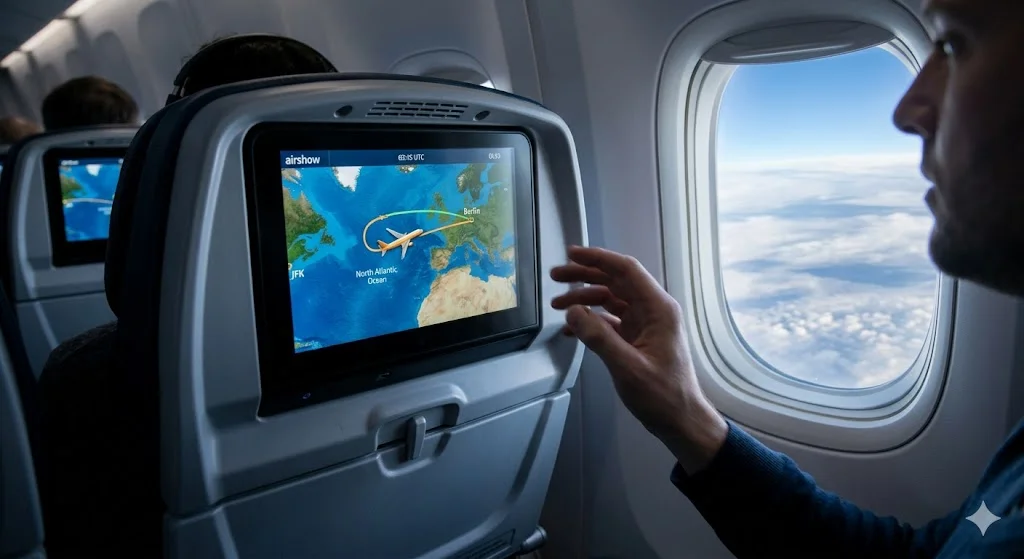
Somewhere over the Atlantic, the lights in the cabin flicker on, the pilot’s voice comes through the speakers, and you hear a sentence you were not expecting: “Ladies and gentlemen, we have made the decision to divert to Halifax.” Your connecting flight is in three hours, your first meeting of a two-day trip starts tomorrow morning, and your phone is on aeroplane mode somewhere over international waters.
A diversion on a long flight is genuinely disorienting not just logistically, but psychologically. Most passengers have never experienced one, have no idea what their rights are, and have no plan for what to do next. And yet flight diversions are far more common than most people assume. Industry data suggests the chance of any given flight being diverted sits between 0.2 and 0.3 percent, a small number that multiplies across the tens of thousands of flights operating globally every single day to produce hundreds of diversions worldwide on a typical week.
For leisure travellers, a diversion is an inconvenience. For business travellers, people with meetings, presentations, client events, and colleagues waiting on their arrival, it can be genuinely consequential. This guide explains exactly what a diversion on a long flight means, why they happen, what you are entitled to, and precisely what to do from the moment you hear that announcement.
Quick answer: A diversion on a long flight occurs when the aircraft is forced to land at an airport other than its original destination. Common causes include severe weather, a medical emergency on board, a mechanical fault, or a closed runway. If your long-haul flight is diverted, stay calm, do not leave the airport without confirming the airline’s plan, contact your employer immediately, and document every expense from the moment of diversion. The sections below explain everything in detail.
What Is a Diversion on a Long Flight?
A flight diversion occurs when an aircraft lands at a different airport than the one shown on your boarding pass. The decision to divert is made by the pilot in command, who has sole and final authority over the safety of the aircraft. In most cases, the diversion is made in coordination with air traffic control and the airline’s operations centre, but the pilot’s authority to divert cannot be overridden by commercial considerations, not by the airline, not by the cost of landing fees at an unplanned airport, and not by the inconvenience it causes to passengers or crew.
Diversions are distinct from delays and cancellations, though they sometimes result in both. A diverted flight has taken off and is in the air or, in some cases, has already begun its descent when the decision to change destination is made. What happens next depends entirely on why the diversion occurred.
The three types of diversion
Aviation professionals categorise diversions into three groups based on the phase of flight at which they occur.
An air turnback is when the aircraft returns to the airport it departed from, typically within the first hour of flight before it has moved too far along its route. These are most common when a technical fault emerges during climb or shortly after departure, or when a medical emergency occurs that can be safely managed at the origin airport.
An en-route diversion is when the aircraft diverts to an intermediate airport before reaching its destination. These are the most operationally complex diversions and the most disruptive for passengers on long-haul routes. An aircraft flying from London to Singapore might divert to Dubai; a flight from New York to Frankfurt might land in Reykjavik. The aircraft is nowhere near its destination and nowhere near its origin, and the airline must now manage a large number of passengers stranded at an airport that may have limited facilities or capacity.
A destination diversion is when the aircraft reaches the vicinity of its planned destination but is unable to land there, perhaps because of severe weather below landing minimums, a blocked runway, or an emergency at the destination airport itself, and is redirected to a nearby alternative airport. For a flight to Heathrow diverted to Gatwick, the practical disruption is manageable. For a transatlantic flight diverted from JFK to Boston, the consequences are more significant.
Why Do Long Flights Get Diverted?
Understanding why diversions happen is useful for two reasons: it removes some of the fear and confusion of the announcement itself, and it helps you anticipate what the airline’s response will look like in each scenario.
1. Severe weather at the destination or en route
Weather is the single most common cause of diversions, accounting for the majority of non-emergency redirections. Airports have minimum conditions required for landing: cloud base height, horizontal visibility, crosswind limits, and runway contamination thresholds, and when actual conditions fall below those minimums, aircraft cannot land there and must be redirected to an alternate.
On long-haul routes, weather diversions most often occur when conditions at the destination deteriorate significantly between the flight’s departure and its scheduled arrival time a window that may be 10 to 14 hours. A flight departing London in calm conditions with clear skies forecast at Singapore cannot anticipate a convective storm system that develops over the arrival airport hours later.
En-route weather diversions are less common but do occur, most typically when severe turbulence, volcanic ash clouds, or significant weather systems develop along the planned route in a way that makes continuing unsafe or impractical.
2. A medical emergency on board
Medical emergencies are the second major cause of diversions, and they are more common than most passengers realise. Aircraft carry a limited medical kit and typically have trained cabin crew and, if fortunate, a medically qualified passenger on board, but they are not hospitals. When a passenger or crew member experiences a serious medical event that requires hospital-level care, the pilot in command must weigh the time remaining to the destination against the time to the nearest suitable airport with adequate medical facilities. In many cases, the nearest suitable airport wins.
The most frequently cited in-flight medical events leading to diversion include cardiac incidents, severe allergic reactions, strokes, and serious trauma. Long-haul routes are more vulnerable to this cause simply because of passenger demographics: older travellers, those with pre-existing conditions, and those on very long journeys where dehydration and inactivity compound underlying health factors.
A mechanical fault or technical issue
Aircraft systems are highly redundant by design. The loss of a single system rarely requires an immediate diversion; most aircraft can continue safely to their destination with a degraded system, operating under what are known as Minimum Equipment List (MEL) provisions. But when a fault affects a safety-critical system, reduces the aircraft’s performance below acceptable margins, or involves a warning that cannot be cleared and assessed in the air, the crew may determine that landing as soon as practicable is the appropriate response.
Mechanical diversions on long-haul routes are of particular concern because many of these routes cross extended areas of ocean where suitable diversion airports are limited. ETOPS (Extended Twin-engine Operational Performance Standards) rules require long-haul twin-engine aircraft, which now includes virtually all modern widebody jets, to plan their routes within a specified flying time of a viable diversion airport at all times. This is why you will sometimes notice long-haul routes on a flight map that appear to curve towards land rather than taking the most direct path: the aircraft is hugging the coastline to remain within ETOPS diversion range.
3. A security incident or disruptive passenger
Security-related diversions occur when a credible threat is identified on board, whether reported by a passenger, detected by crew, or flagged by ground authorities. These diversions are relatively rare but treated with absolute priority when they occur.
Disruptive passenger incidents, including intoxicated or aggressive behaviour, can also result in diversion when the crew determines that the safety of the aircraft cannot be maintained until reaching the destination. These situations result in the disruptive individual being met by police on landing, and the resulting delay and operational disruption falls on all other passengers through no fault of their own.
Air traffic control restrictions
Occasionally, diversions result not from anything on the aircraft itself but from external constraints restricted airspace due to a military exercise or geopolitical event, a major incident at the destination airport that closes it to inbound traffic, or a systemwide ground stop at a hub that leaves the aircraft with insufficient fuel reserves to hold and wait. These tend to be shorter diversion events with faster resolution than weather or medical diversions.
What Happens When a Long-Haul Flight Is Diverted?
The sequence of events following a diversion varies significantly depending on the cause, but the general pattern looks like this.
Once the diversion decision is made, the crew communicates with the receiving airport and with the airline’s operations centre. The receiving airport activates its contingency procedures for unplanned arrival ground handling, steps or jetbridges, fuel if needed, and any specialist services such as medical support or law enforcement if the situation requires them.
On landing, the crew will typically provide an initial announcement with whatever information they have about next steps. This information is often incomplete in the first 30 to 60 minutes post-diversion, and it is important to understand that the cabin crew genuinely may not know the timeline, yet they are receiving updates from the airline at the same time passengers are.
What happens next depends on the cause:
Weather diversions typically resolve when conditions improve, and the aircraft often continues to its original destination once the airport reopens. However, if the weather event is prolonged, or if crew flight duty limits are reached during the ground hold, the flight may be cancelled entirely, and passengers rebooked.
Medical diversions usually resolve relatively quickly once the affected individual is transferred to medical care on the ground. In most cases the aircraft continues to its destination with the remaining passengers, potentially with a delay of two to four hours.
Mechanical diversions are the most unpredictable. If the fault can be repaired on the ground at the diversion airport and if parts and engineering support are available, the flight may continue after a delay. If not, the airline must arrange alternative transport or accommodation while passengers wait for a replacement aircraft, which on long-haul routes can take 24 hours or more.
Security or disruptive passenger diversions typically proceed to continuation of the original flight relatively quickly once the ground authorities have taken over. The delay is usually measured in hours rather than days.
Your Rights as a Passenger When Your Flight Is Diverted
This is the area where most passengers are most poorly informed, and where the rules are more nuanced than a simple set of guarantees.
Under EU / UK regulation (EC 261/2004 and its UK equivalent)
EC 261/2004, which applies to flights departing from EU airports and flights arriving into EU airports on EU or UK carriers, is the most passenger-protective aviation regulation in the world. Under this regulation, airlines are required to provide:
Right to care: Regardless of the reason for the diversion, airlines must provide meals and refreshments proportionate to the waiting time, hotel accommodation if an overnight stay becomes necessary, and transport between the diversion airport and the accommodation or the original destination airport.
Right to compensation: Financial compensation (€250 to €600 depending on route distance) applies when a significant delay results from circumstances within the airline’s control which generally excludes extraordinary circumstances such as severe weather or a genuine medical emergency but includes many technical faults and operational failures. Whether a specific diversion qualifies for compensation is frequently disputed and has been the subject of significant case law.
Right to reimbursement or rerouting: Passengers on significantly delayed or cancelled flights have the right to a full refund of their ticket or rerouting to their final destination at the earliest opportunity.
Under US Department of Transportation rules
US passenger protection rules are less prescriptive than EU/UK equivalents. Airlines operating in the US are required to have and disclose customer service commitments, but there is no federal mandate for financial compensation equivalent to EC 261. Where diversion compensation applies under US rules, it is typically governed by individual airline contract of carriage rather than statutory right.
Practical limitations to be aware of
In practice, the right to care in a diversion situation can be difficult to enforce in the moment, particularly at smaller diversion airports that are not equipped to handle large numbers of stranded long-haul passengers simultaneously. Keep all receipts for any expenses you incur (meals, transport, accommodation, communication) from the moment of diversion, as these will be needed for any subsequent claim.
Airlines have a legal obligation to keep passengers informed of developments at regular intervals. If information is not forthcoming, you are entitled to ask the gate or ground staff directly and to request updates in writing if the situation is prolonged.
What Business Travellers Should Do When Their Long-Haul Flight Is Diverted
Everything above applies to all passengers. What follows is specific to business travellers the people for whom a diversion is not merely inconvenient but potentially professionally consequential.
1. Stay on the aircraft or in the gate area until you have information
The single most common mistake business travellers make during a diversion is leaving the immediate arrival area before the airline has communicated its plan. In the chaotic first 30 minutes post-diversion, passengers who wander into the terminal, head to baggage reclaim, or attempt to exit the airport can find themselves unable to reboard the aircraft once continuation is confirmed or unable to access the accommodation or transport the airline is organising in the gate area.
Unless the crew explicitly announces that all passengers should proceed through arrivals, stay close to the aircraft or gate. Ask a member of the crew or ground staff before moving.
2. Notify your employer and key contacts immediately
As soon as you have a signal, inform your manager and any colleagues or clients expecting your arrival that you have been diverted. You do not need to have a full picture of the timeline to make this call; a simple message saying your flight has been diverted, you do not yet know the resolution, and you will update as soon as you know more is sufficient and professional.
The worst thing you can do is go silent. Colleagues waiting on your arrival for a meeting, clients with a schedule built around your presence, or a manager responsible for your duty of care all need to know where you are. A brief, factual message immediately is vastly better than a detailed one three hours later.
If your company uses a corporate travel management platform such as Clooper, the operations team may already have visibility of the diversion through flight tracking, but a direct message is still necessary to confirm your status and location.
3. Understand your rebooking options before committing to anything
Airlines will typically offer to rebook passengers affected by a diversion onto the next available service to the original destination. On major long-haul routes from hub airports, this may mean a flight within a few hours. At smaller or less well-connected diversion airports, it may mean a wait of 12 to 24 hours.
Before accepting the first option offered, consider:
- Whether a connecting flight from the diversion airport to the destination is available sooner than waiting for the continuation or rebooking of the original flight
- Whether ground transport (train or coach) is practical and faster for diversions that have put you relatively close to your destination
- Whether your priority is reaching your original destination or reaching a location close enough to conduct your business; sometimes these are different
Keep the original booking reference and do not cancel or rebook your ticket without first confirming your rights under the applicable regulation. A unilateral rebooking made without the airline’s involvement may limit your ability to claim subsequent costs.
4. Document every expense from the moment of diversion
Everything you spend from the moment the aircraft lands at the diversion airport is potentially recoverable from the airline under right to care provisions, from your travel insurance, or from your company’s expense process. This includes:
- Meals and drinks while waiting at the diversion airport
- Transport between the diversion airport and any accommodation
- Accommodation if an overnight stay is required
- Communication costs (international roaming calls, data charges)
- Any additional transport costs incurred to reach your destination or return home
- Costs resulting from missed connections that required rebooking
Photograph every receipt immediately after purchase. Most airline reimbursement processes require itemised receipts, not estimates, and the pressure of the moment makes it easy to lose track of what you have spent and on what.
5. Know what your travel insurance covers
Most comprehensive travel insurance policies include cover for flight diversions, but the specifics vary significantly between providers. Common coverage areas include accommodation costs during extended diversions, alternative transport costs, and compensation for missed pre-paid activities or accommodation at the destination. Some policies include a daily cash benefit for each 24-hour period you are stranded.
Before travelling on any long-haul business trip, familiarise yourself with your policy’s disruption and diversion provisions. Know the claims number, keep it accessible offline, and understand whether the policy requires you to contact the insurer before incurring high costs (some do).
6. Understand your company’s duty of care obligations
Employers sending staff on business travel have legal and ethical obligations under duty of care: the responsibility to take reasonable steps to ensure the health, safety, and wellbeing of travelling employees. A flight diversion is precisely the kind of disruption that duty of care frameworks are designed to address.
In practice, this means: your employer should have a mechanism for knowing where you are at all times during business travel, a contact available to help you manage the logistics of a significant disruption, and clarity on what costs the company will cover in a diversion scenario. If your organisation does not have documented answers to these questions, a diversion is a very poor time to discover the gap.
Clooper’s corporate travel management platform provides real-time visibility of employee travel itineraries, integrates travel booking with policy compliance, and gives operations teams the information they need to support travellers during disruptions like diversions without relying on the traveller to manually report their location under pressure.
7. Claim your compensation after the fact
Once you have reached your destination and the immediate disruption is behind you, submit your claim. Under EC 261/2004, you typically have up to six years (in the UK and some EU jurisdictions) to submit a compensation claim, so there is no need to do this on the day. However, doing it promptly while the details are fresh is strongly recommended.
Gather your boarding pass, booking confirmation, receipts for all additional expenses, and any written communications from the airline about the diversion. Submit through the airline’s official claims process first. If the claim is disputed or ignored, national enforcement bodies (the Civil Aviation Authority in the UK, national aviation authorities in EU countries) have jurisdiction to investigate and enforce compliance.
How to Prepare for a Potential Diversion Before You Fly
The best time to prepare for a flight diversion is before you board. Most business travellers never think about this, which is why those who do are invariably better placed when it happens.
Build buffer time into long-haul itineraries
The most practical single action is to avoid scheduling critical business engagements on the same day you arrive from a long-haul flight. A diversion, even a short one, can add four to eight hours to your journey time. Arriving the evening before a major meeting rather than the morning of it means that even a significant disruption can often be absorbed without professional consequence.
Carry a fully charged power bank
A diversion strands you at an airport with no guarantee of functioning USB charging points. A full power bank keeps your phone operational throughout an extended diversion period and is one of the most underrated items in a business traveller’s carry-on. Refer to our full guide on how to prepare for a long flight for a complete carry-on checklist.
Have your travel documents accessible offline
During a diversion, you may need to present your passport, travel insurance details, and booking reference repeatedly to immigration if the diversion country requires it, to the airline, to ground staff, and to accommodation. Keep all of these saved in a notes app or travel wallet that does not require an internet connection to access.
Know your airline’s disruption contact number
Most major airlines have a dedicated disruption or delay line separate from their general customer service number. This number typically has shorter wait times during major disruptions. Find it before you fly and save it in your phone.
Ensure your company has your itinerary in real time
If your employer does not currently have visibility of your travel in real time, including which aircraft you are on and where you are at any given point in a journey a diversion is a scenario where that gap matters. Corporate travel management platforms that integrate with flight tracking systems give employers and travel managers the visibility needed to act quickly on behalf of a traveller who may be in a poorly connected airport in an unexpected location.
Diversion vs Delay vs Cancellation: What Is the Difference?
These three terms are often confused, and the distinctions matter both legally and practically.
A delay means your flight departs or arrives later than scheduled but follows the same route to the same destination. Your rights under EC 261/2004 begin to activate at delays of two hours for short-haul and three hours for long-haul, with compensation rights typically kicking in at delays of three hours or more at the final destination.
A cancellation means the flight does not operate at all. You are entitled to a full refund or rerouting, and compensation applies in most cases unless extraordinary circumstances are established.
A diversion means the flight operated but landed somewhere different to the intended destination. Depending on what happens next whether the flight continues, whether you are rebooked, and how long the process takes the applicable rights are a combination of the right to care (which applies immediately) and potentially the right to compensation (which depends on the total delay to arrival at your final destination and the cause of the diversion).
One important nuance: if a diversion results in you arriving at your final destination more than three hours late, EC 261 compensation rights may apply even if the diversion itself was caused by extraordinary circumstances, depending on whether the airline could have prevented the consequential delay through available earlier alternatives.
Frequently Asked Questions
What should I do first if my long-haul flight is diverted?
Stay in the immediate gate area and wait for an update from the crew or ground staff before moving through the terminal. As soon as you have a mobile signal, notify your employer and any contacts expecting your arrival. Then document your situation; note the time, your location, and any communications from the airline so you have a clear record for any subsequent claim.
Am I entitled to a hotel if my long-haul flight is diverted overnight?
Yes. Under EC 261/2004 (applicable to EU and UK-departing flights, and EU/UK carrier arrivals), airlines are required to provide hotel accommodation when an overnight stay at the diversion airport becomes necessary, along with transport between the airport and the hotel. If the airline fails to arrange this, you can book accommodation yourself and submit the cost for reimbursement; keep all receipts.
Can I claim compensation for a flight diversion?
Financial compensation under EC 261 depends on whether your arrival at the final destination was delayed by three or more hours, and on whether the diversion was caused by extraordinary circumstances (weather, genuine medical emergencies) or by circumstances within the airline’s control. Technical faults that were knowable in advance, for example, may not qualify as extraordinary circumstances. If you are unsure, submit a claim and let the airline determine eligibility; the worst outcome is a refusal, which can be challenged.
Will my travel insurance cover costs from a flight diversion?
Most comprehensive travel insurance policies include flight disruption cover that applies to diversions. This typically covers accommodation, additional transport, and in some cases missed pre-paid bookings at the destination. Check your specific policy before travelling, particularly around any requirement to notify the insurer before incurring costs above a certain threshold.
How long do flight diversions typically last?
This varies enormously depending on the cause. Weather diversions can resolve in a few hours once conditions improve, or they can result in extended stays if the weather system is prolonged. Medical diversions are typically resolved in two to four hours before the flight continues. Mechanical diversions are the most unpredictable and can result in waits of 12 to 36 hours if a replacement aircraft is required. Security-related diversions typically resolve within a few hours.
What should my employer do when a business traveller’s flight is diverted?
A responsible employer should have a travel risk management process that includes: real-time visibility of employee travel itineraries, a dedicated contact available to support travelling employees during disruptions, clarity on what costs the company will cover (accommodation, rebooking, meals), and a duty of care framework that extends to significant travel disruptions. Platforms like Clooper centralise these functions so that when a diversion happens, the operations team has the information and tools to act immediately rather than waiting for the traveller to self-report.
Summary: What to Know About Diversions on Long-Haul Flights
A diversion on a long flight is uncommon but not rare, and for business travellers the professional consequences of being unprepared can extend well beyond the inconvenience. The most important things to carry into any long-haul journey are: a basic understanding of why diversions happen and what to expect, clarity on your rights as a passenger under the applicable regulation, a plan for notifying your employer and contacts quickly, and the documentation habits (receipts, records, written communications) that make post-diversion claims straightforward.
The business travellers who navigate diversions best are almost always those who treated the possibility as something to plan for before departure, not something to figure out in real time at an airport they had no intention of visiting.
Clooper helps corporate travel managers maintain real-time visibility of employee journeys, ensures bookings are policy-compliant from the outset, and gives organisations the operational infrastructure to support travelling employees when disruptions like diversions occur. If your organisation sends employees on regular long-haul routes and does not yet have a structured approach to travel disruption management.