Uncategorized
How Much Cash Can You Carry on a Plane Internationally?
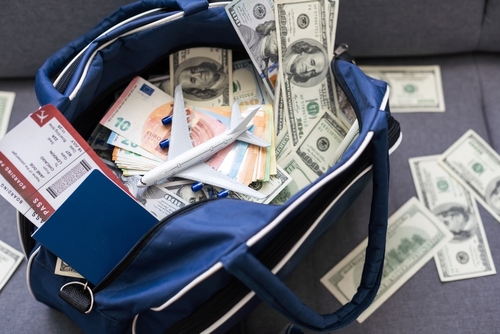
Whether you’re heading abroad for business, sending money to family, or simply heading somewhere that doesn’t accept cards, you’ve probably asked yourself: how much cash can I actually carry on an international flight? The short answer? There’s no universal cap on how much cash you can physically carry. But cross the wrong threshold without declaring it, and you risk having your money seized, no charges required.
This guide breaks down how much cash can you carry on a plane internationally the rules by country, explains exactly what you need to declare and when, and shares practical tips for travelling with cash safely.
The Golden Rule: No Hard Limit, But Declaration Is Mandatory
Here’s the first thing to understand: carrying large amounts of cash on a plane is perfectly legal. There is no blanket international law restricting how much cash a traveller can bring on board.
However, most countries impose a declaration threshold typically around $10,000 (or its equivalent in local currency). Once you meet or exceed that threshold, you are legally required to declare it to customs authorities. Fail to do so, and your money can be confiscated, and you could face significant fines or even criminal charges.
The declaration doesn’t get you in trouble. Not declaring does.
Cash Declaration Rules by Country
1. 🇺🇸 United States
If you’re travelling to or from the US with $10,000 or more in cash or monetary instruments, you must declare it to US Customs and Border Protection (CBP) using FinCEN Form 105 — formally known as the “Report of International Transportation of Currency or Monetary Instruments.”
You can:
- Complete Form FinCEN 105 online before you travel
- Print and present it to a CBP officer at the border
- Ask a CBP officer for a paper copy and fill it out at customs
Important: In the US, the $10,000 threshold applies to your entire travel group, not each individual. If your family is collectively carrying more than $10,000, you must declare it — even if no single person is over the limit.
Failure to declare can result in confiscation of all currency and potential criminal prosecution.
2. 🇬🇧 United Kingdom
The UK requires a declaration of £10,000 or more (or the foreign currency equivalent) when travelling in or out of England, Scotland, or Wales. You can declare via the gov.uk portal or at the airport.
Like the US, the UK applies the threshold to group totals, not individuals. If your travel party collectively carries £10,000, a declaration is required.
Failure to declare can result in seizure of the cash and a fine of up to £5,000.
Note for Northern Ireland: The threshold is €10,000 when travelling between Northern Ireland and any non-EU country, including Great Britain.
3. 🇪🇺 European Union
Travellers entering or leaving the EU with €10,000 or more (or its equivalent in other currencies) must complete an EU Cash Declaration Form with customs authorities.
Unlike the US and UK, in the EU the €10,000 limit applies per individual traveller — including minors, through their parents or guardians. A family of four could theoretically carry €40,000 into the EU combined without triggering a declaration, as long as no single person carries €10,000 or more.
Note: Within the EU itself, there are no harmonised rules for cash carried between EU member states — always check the rules of each specific country you are transiting through.
4. 🇨🇦 Canada
Canada sets its threshold at CAD $10,000, and like the EU, the limit is assessed per person, not per household. Declare using the CBSA Declaration Card or via the ArriveCAN system.
5. 🇦🇺 Australia
Australia requires a declaration of AUD $10,000 or more to the Australian Border Force upon arrival or departure. Australia follows the same group approach as the US and UK, the combined total of a travel group counts, and deliberately splitting cash among family members to stay under the threshold is considered “structuring,” which is illegal.
Other Popular Destinations at a Glance
| Declare to the South African Revenue Service | Declaration Threshold | Notes |
|---|---|---|
| United States | USD $10,000 | Group total; FinCEN Form 105 required |
| United Kingdom | £10,000 | Group total; declare via gov.uk or at airport |
| European Union | €10,000 | Per individual, including minors |
| Canada | CAD $10,000 | Per individual |
| Australia | AUD $10,000 | Group total; structuring is illegal |
| India | USD $5,000 cash / USD $10,000 total monetary instruments | Declare foreign currency exceeding limit |
| South Africa | ZAR 25,000 | Declare to South African Revenue Service |
| Thailand | THB 450,000 | Relatively high threshold |
| Japan | ¥1,000,000 (approx. USD $6,500) | Declare upon arrival or departure |
| UAE | AED 100,000 | Equivalent approx. USD $27,000 |
Always verify rules with the customs authority of your destination country before you travel, as thresholds and regulations can change.
When customs authorities talk about “cash,” they mean more than just banknotes. For declaration purposes, monetary instruments typically include:
- Banknotes and coins — both local and foreign currency currently in circulation (and in some jurisdictions, currency no longer in circulation but still exchangeable at banks)
- Traveller’s cheques
- Money orders
- Bearer negotiable instruments — cheques, promissory notes, or bonds signed but without a named beneficiary
- Gold bars, nuggets, or bullion with a gold purity of at least 99.5% (in many jurisdictions)
What you do NOT need to declare:
- The balance in your bank account
- Debit and credit cards
- Personal cheques made out to a specific person
- Electronic transfers via apps like Wise, Revolut, Venmo, or Zelle
The $10,000 limit applies only to physical cash and instruments you are physically carrying across the border.
The Role of TSA and Airport Security
It’s worth clarifying what the Transportation Security Administration (TSA) does and doesn’t do.
TSA’s job is to screen for security threats, weapons, explosives, and dangerous items. They are not a financial enforcement agency, and no TSA rule restricts the amount of cash you can carry through a security checkpoint.
However, if a TSA agent notices a large sum of cash during screening, they may alert law enforcement, who can question you and, under civil asset forfeiture laws, potentially seize the funds if they suspect criminal activity, even without charging you with a crime. This is why carrying documentation showing the legitimate source of your funds (bank withdrawal slips, business invoices, employer letters) is always a smart move.
The “Structuring” Trap: What Not to Do
One of the most common and costly mistakes travellers make is attempting to split cash among family members or across multiple bags to stay under the declaration threshold. This is known as “structuring” and it is illegal in the US, UK, Australia, and many other countries.
Customs authorities are trained to spot this, and if detected, it can result in the seizure of all funds carried by your group, plus potential criminal charges.
Key rule: If your combined cash total across your group exceeds the threshold, declare it regardless of how it’s divided.
5 Practical Tips for Travelling with Cash Internationally
1. Declare if in doubt. Declaring cash doesn’t cause problems. It’s not declaring that creates them. If you’re anywhere near the threshold, fill out the form. It takes minutes.
2. Carry proof of funds’ origin. While not always required, bank statements, withdrawal receipts, a letter from your employer, or business documents showing the source of funds can save you significant stress if questioned.
3. Keep cash in your carry-on, not checked luggage. Never pack large amounts of cash in a checked bag. If it’s lost, stolen, or flagged, recovery is extremely difficult. Keep valuables on your person at all times.
4. Check your destination country’s rules before every trip. Rules change. A country you visited two years ago may have updated its thresholds or reporting requirements. Always verify with the official customs authority of your destination.
5. Consider safer alternatives for large sums. For significant amounts, international bank transfers, prepaid travel cards, or multi-currency accounts (like Wise or Revolut) may be safer and more convenient than carrying physical cash. These electronic transfers are not subject to declaration requirements.
What Happens If You Don’t Declare Cash in The Airport?
The consequences of failing to declare cash vary by country but are consistently severe:
- United States: Confiscation of all undeclared currency; potential criminal charges under 31 USC § 5316
- United Kingdom: Seizure of funds; fine of up to £5,000
- European Union: Seizure; penalties determined by individual member states
- Australia: Seizure, fines, and potential imprisonment for structuring
In many jurisdictions, under civil asset forfeiture laws, authorities can seize funds simply on suspicion of criminal activity without needing to formally charge you. This makes proper documentation and compliance critical.
Frequently Asked Questions
Do I need to declare cash on a domestic flight?
No. Within the US, there are no declaration requirements for domestic flights, regardless of the amount you’re carrying. The same applies to flights entirely within most other countries. The $10,000 rule only applies when crossing international borders.
Does gold count toward the declaration threshold?
In many countries, yes gold bars, nuggets, or bullion with high purity (typically 99.5%+) are treated as a monetary instrument and must be declared if their value exceeds the threshold.
What if I’m carrying multiple currencies?
The threshold applies to the combined value of all currencies and monetary instruments you’re carrying. Convert all amounts to the local or reporting currency (e.g., USD for US customs) and add them together to determine if you exceed the threshold.
Can I carry more than $10,000 if I declare it?
Yes. There is no upper limit on how much you can carry you simply must declare it and be prepared to answer questions about the source and purpose of the funds.
Do credit and debit card limits count?
No. The declaration rules apply only to physical cash and monetary instruments you are physically transporting. Your bank account balance and credit limit are irrelevant.
Final Word
The rules around carrying cash internationally are more about transparency than restriction. Governments want to track large cash movements to prevent money laundering and financial crime — not to stop legitimate travellers from accessing their own money.
As long as you know the thresholds for the countries you’re travelling between, carry documentation for the source of your funds, and declare when required, travelling with cash is entirely legal and manageable.
When in doubt: declare first, ask questions later.