
Tips
How to Prevent Expensive Pool Damage Through Water Testing
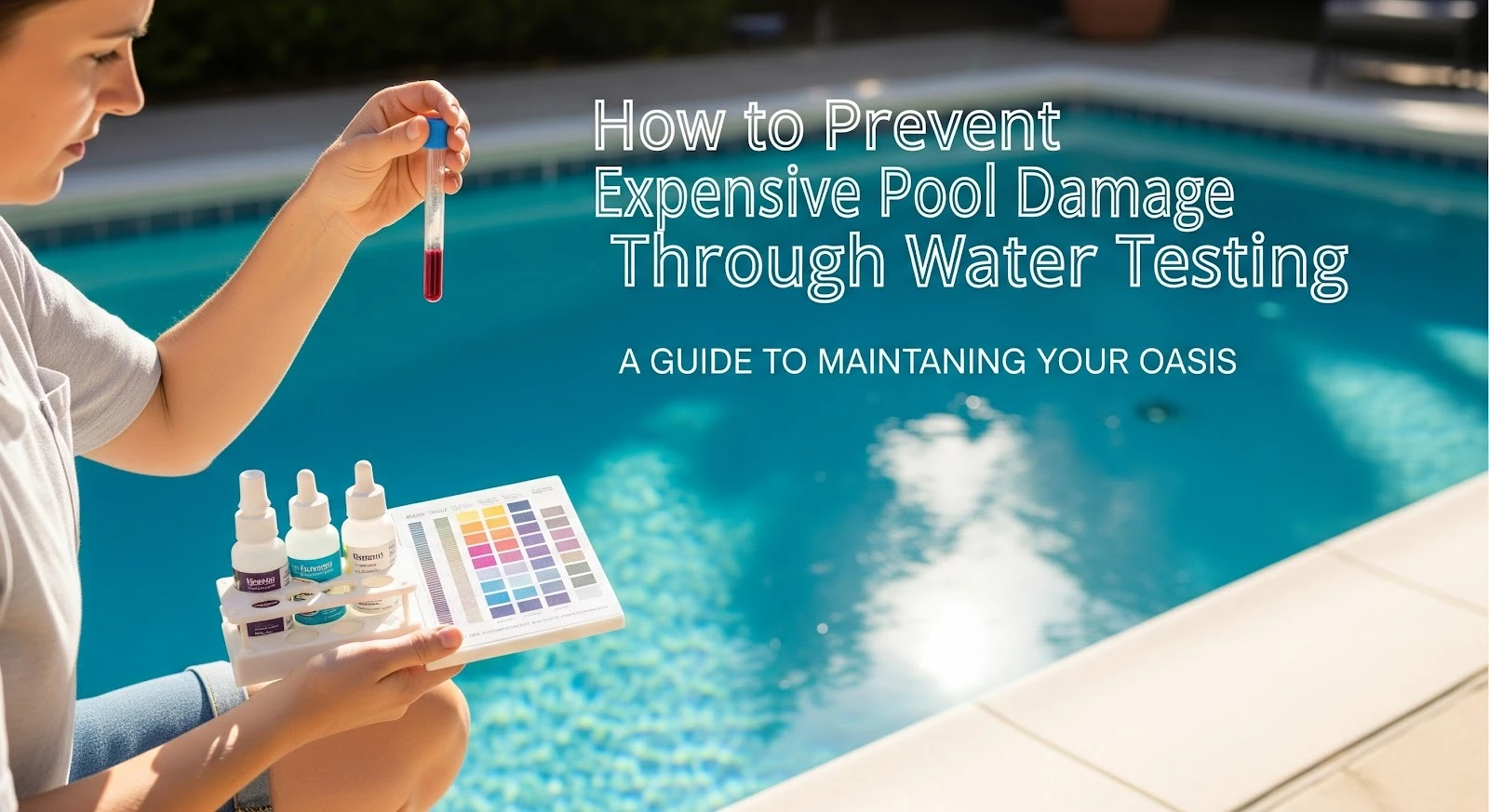
Everyone who has owned a pool for longer than a season has almost certainly experienced a day when the water looks good, no one is complaining, and then it all goes wrong. Perhaps the liner is beginning to wrinkle, the plaster is rough, the heater is giving an error code, or you can see little craters appearing on the steps.
The next lesson that most pool owners discover too late is that pool water may be a silent killer even before it becomes cloudy or green. Frequent water testing is not about being a fussy homeowner; it is the most inexpensive of the early warning mechanisms you need to avoid problems that can result in hundreds or thousands of dollars in damage.
Understanding Pool Water Balance: Defence vs. Attack
The surfaces and equipment of the pool are in water 24/7, and therefore, the chemistry of the water is essentially what your pool is breathing. When it is balanced, it is soft on the plaster, tile, vinyl, seals, and metal pieces. Once it is out of balance, it begins to draw minerals off the surfaces (corrosion/etching) or deposit minerals onto the surfaces (scaling), and each of these directions is costly to follow early.
The difficulty in this is that bad water does not always declare itself. A pool may appear clear as the pH is rising, calcium accumulates in the heater, or chlorine is no longer effective due to stabiliser creep as time passes. Testing will find those shifts when they are easy (and cheap) to correct.
3 Common Types of Pool Damage Caused by Poor Chemistry
Water chemistry causes most “pool damage” in predictable categories. This is because when you test frequently, you end up being able to capture the conditions which give rise to them.
- Corrosion and etching: Plaster, grout, metal components, and some parts of the heater are subject to corrosion by low pH and low alkalinity. With time you will find roughness, pitting, and stained parts that cannot be brushed off.
- Scale and calcium deposition: High pH in combination with high calcium may form crusty deposits on tile, within heaters, on pool fittings, and in salt cells. Scale not only looks ugly, but it can also create a block to flow or heat transfer.
- Sanitiser malfunction (and the issues that arise): When the stabiliser (cyanuric acid) reaches excessive levels, chlorine will become “handcuffed” and lose its punch. That is the reason you are fighting with repeated algae, wasting chemicals, and in some cases, having to do aggressive treatments that strain the surfaces and equipment.
All this is not intended to frighten you. It is supposed to emphasise the fact that chemistry is not something abstract, but rather physical cause and effect.
Essential Pool Chemistry Tests: What You Need to Measure
A degree in chemistry is unnecessary, but you must have an interest in what you are reading and why it is important. The following are the main tests that will ensure your pool is not harmed in the long term:
- pH: This is the big one. It is both corrosive at too low and promotes the growth of scale at too high.
- Total alkalinity: It is like thinking of pH buffering. When alkalinity is not set, pH becomes even more erratic and the swings produce wear and tear in the long run.
- Free chlorine (or bromine): This is your active sanitiser. When it is always low, algae and bacteria establish themselves in a position which will be difficult to reverse in the future.
- Calcium hardness: This is crucial to plaster pools and is still of importance to others since it influences the potential for scale. Both too low and too high may add to etching and scaling risk, respectively.
- Cyanuric acid (stabiliser): Most outdoor chlorine pools require this, but in excess amounts, it silently causes the “why won’t my chlorine work?” situation.
- Salt (when you have a salt system): With low salt levels, the generator is overly stressed; with overly high salt levels, the corrosion rate can increase significantly in certain systems.
This is what makes pool care orderly in case you have ever thought that pool care is random. Each figure is a hint as to what the water is doing to your pool now.
The Ideal Pool Water Testing Schedule for Homeowners
In the case of most residential pools, the following is a realistic timeline that helps to identify issues sooner before making owning a pool a homework project:
- Test pH and sanitiser 2-3 times per week (daily in heat waves or heavy traffic)
- Test alkalinity once per week (or once per week after everything is stable).
- Measure calcium hardness and stabiliser after one month.
- Test during the major events: heavy rain, big pool parties, full lot of water topping off, or opening/closing.
One tip that is often forgotten is to test after major events. Chemistry is diluted by rain and splash-out. Debris, sweat, and sunscreen are added by the parties. The chemical reaction is accelerated by heat. Testing right after such instances eliminates gradual drift, which ultimately turns out to be inexplicable harm.
Best Pool Test Kits: Strips vs. Liquid Reagents
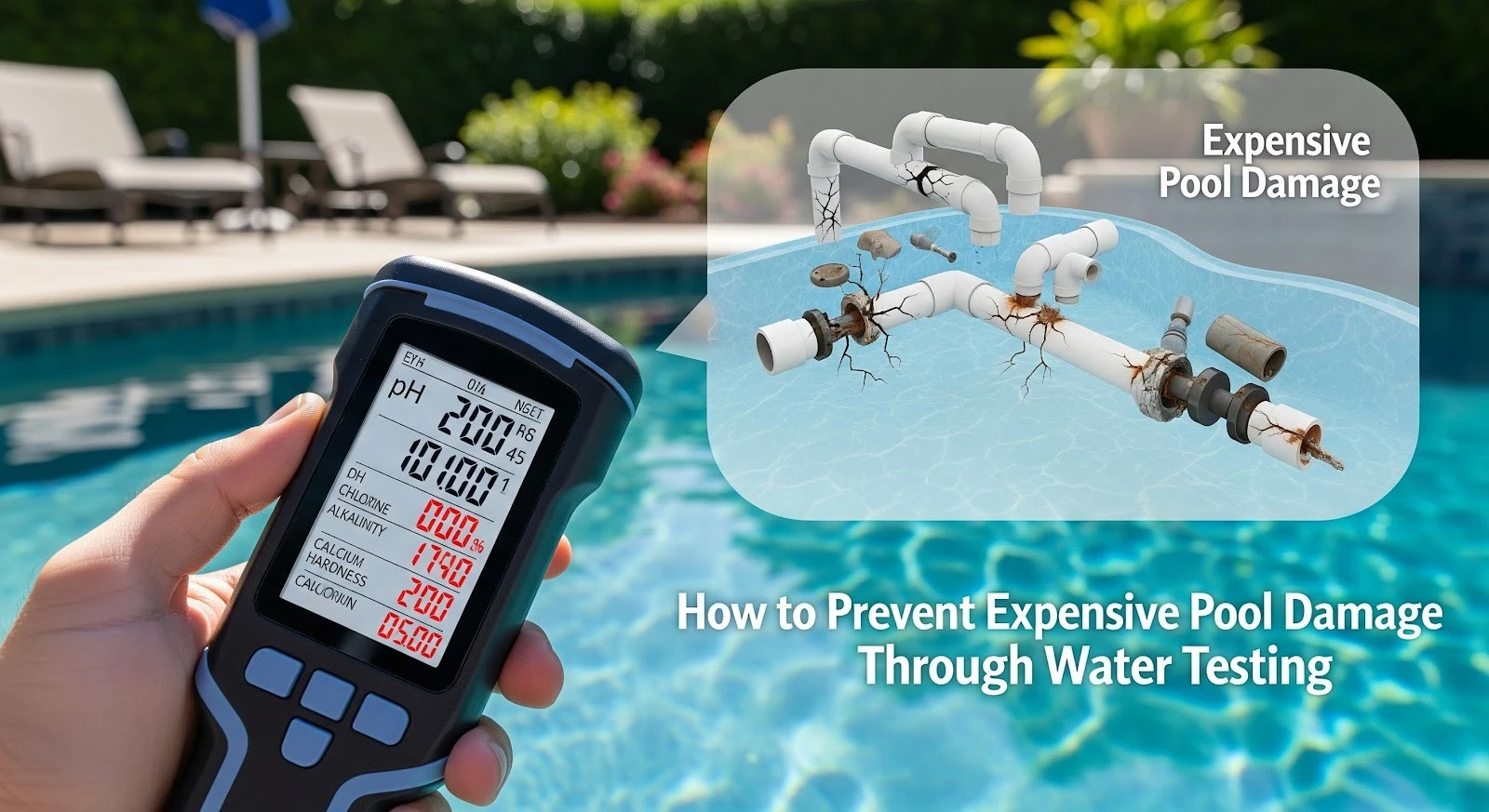
Tests are not all created equal. We are not the only ones to wonder which of the two different results you will get the next time you get two different results back-to-back.
A quality drop-based kit can be more consistent than cheap strips, particularly for pH and chlorine, on a daily basis. In case you are working with a pool reagent kit, keep it in a cool and shady area and change it after the date of purchase has expired; old chemicals can read wrong, and by reading wrong, you are giving the wrong dose.
When you are interested in buying refills, find reliable ones from a reputable supplier, and make an attempt to use one system that you are familiar with. This is aimed at the consistency of data so that you can make small and confident changes rather than big, guesswork swings.
Conclusion: Saving Money with Consistent Pool Care
The good thing about regular water testing is that it makes pool care small and predictable as opposed to a large and stressful fixation. You catch scaling before it hits the tile. You observe the change in chlorine demand in the low places of algae. You keep calcium where it is not needed—out of your heater and off your surfaces.
When you feel like having the “easy pool” that everyone is talking about, this is the way you can have it: test on a regular basis, make minor adjustments, and consider aberrant readings as signals instead of frustrations.
When you find yourself in an adjust, retest, adjust pattern and nothing is working, perhaps it is time to get a qualified pool repair service to determine what is actually wrong. Even a good pro will be able to see that there is a pattern—such as scaling beginning in the heater or an imbalance of the system—that cannot be noticed just by looking at the water.