
Uncategorized
How Much Is the UK Visa Application in Nigeria? Current Rates and What to Expect
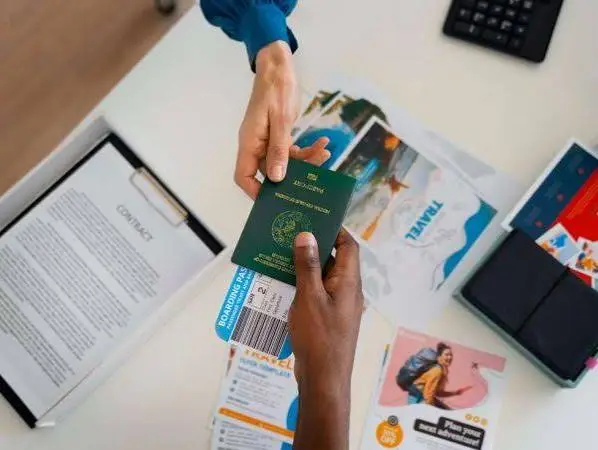
The UK Standard Visitor Visa currently costs £135 for a six-month visa, which works out to between N280,000 and N320,000 for most Nigerian applicants,, depending on the exchange rate and bank charges at the time of payment. That figure is the starting point, but it is rarely the total amount you spend. By the time you add the VFS Global service fee, optional processing upgrades and any supporting service costs, the real spend on a UK visa application from Nigeria is typically higher.
This guide gives you the complete, verified fee breakdown for every UK visa category available to Nigerian applicants in 2026, including what changed in April, what you will pay at VFS Global on top of the government fee, how to pay without your card being declined, and what the total cost looks like for the most common application types.
UK Visa Fees for Nigerian Applicants: Full Breakdown
All fees below are the official Home Office rates as of 8 April 2026. Although fees are listed in pounds, Nigerian applicants pay in US dollars through the VFS Global portal, and the naira equivalent changes regularly due to exchange rate fluctuations. VAC
Standard Visitor Visa (Tourist, Business and Family Visits)
| Visa Duration | Fee (GBP) | Approx. Fee (USD) | Approx. Naira (Jul 2026) |
|---|---|---|---|
| 6 months | £135 | ~$171 | N260,000 to N320,000 |
| 2 years (multiple entry) | £432 | ~$548 | N830,000 to N900,000 |
| 5 years (multiple entry) | £771 | ~$978 | N1,470,000 to N1,570,000 |
| 10 years (multiple entry) | £963 | ~$1,220 | N1,850,000 to N1,980,000 |
The 10-year long-term visitor visa allows multiple entries over 10 years, with each stay capped at 6 months. It works out cheaper than repeated 6 month visas for frequent travellers. For a Nigerian executive travelling to the UK twice a year, the 10-year visa at roughly N1.9 million saves considerably more than the N320,000 paid every six months across five years.
Student Visa
| Visa Type | Fee (GBP) | Approx. Naira (Jul 2026) |
|---|---|---|
| UK Student Visa | £558 | N1,050,000 to N1,120,000 |
| Short Term Study Visa (up to 6 months) | £200 | N380,000 to N420,000 |
| Short Term Study Visa (6 to 11 months) | £200 | N380,000 to N420,000 |
Students are also required to pay the Immigration Health Surcharge of £776 per year of study, always in pounds. This is paid upfront for the full duration of the visa at the point of application. For a three-year undergraduate degree, that surcharge alone is £2,328 (approximately N4.4 million at current rates) on top of the visa fee.
Work Visas
| Visa Type | Fee (GBP) | Approx. Naira (Jul 2026) |
|---|---|---|
| Skilled Worker (up to 3 years) | £819 | N1,550,000 to N1,660,000 |
| Skilled Worker (over 3 years) | £1,639 | N3,100,000 to N3,320,000 |
| Global Talent Visa | £167 | N316,000 to N340,000 |
| Graduate Route | £937 | N1,770,000 to N1,900,000 |
| Innovator Founder Visa | £1,191 | N2,250,000 to N2,420,000 |
The Immigration Health Surcharge remains at £1,035 per adult per year for work visa applicants, with a reduced rate of £776 per year for students and their dependants. The surcharge is paid upfront for the full duration of a visa at the point of application.
Settlement and Nationality Fees (For Reference)
| Application Type | Fee (GBP) | Notes |
|---|---|---|
| Indefinite Leave to Remain (ILR) | £3,226 | Up from £3,029 before April 2026 |
| British Citizenship (Naturalisation) | £1,709 | Up from £1,605 before April 2026 |
| Child Citizenship Registration | £1,000 | Down from £1,214 before April 2026 |
| Family Visa (Spouse/Partner) | £1,846 | Subject to income threshold |
VFS Global Charges: What You Pay on Top of the Government Fee
Beyond the government fee, applicants in Nigeria also pay charges connected to the visa application centre operated by VFS Global. Costs vary depending on the location, appointment availability, and optional services selected, but many applicants spend an additional N30,000 to N80,000 on biometrics related services and logistics.
The VFS Global service fee covers the cost of running the application centre, receiving your documents, taking your biometrics and forwarding everything to the UK Home Office. It is mandatory. You cannot bypass VFS Global and submit directly to the embassy.
Optional VFS services that add to your total cost include:
Premium Lounge Access: a quieter, more comfortable application environment with faster processing at the centre. Costs approximately N25,000 to N40,000 extra, depending on the centre.
Document Checking Service: a VFS staff member reviews your documents before submission to flag obvious gaps. This is not a guarantee of approval and not a substitute for proper professional preparation, but it can catch basic errors. Costs approximately N15,000 to N25,000.
SMS and Email Tracking: real-time status updates on your application. Usually a small add-on of under N5,000.
Courier Passport Return: your passport and decision are couriered back to your address rather than collected at the centre. Costs approximately N8,000 to N15,000 depending on your location.
None of these are required. Your application will be processed without them. Whether they are worth the extra spend depends on your personal preference and how much support you need.
Priority and Super Priority Fees
For business travellers and anyone with a fixed travel date, the processing tier you choose significantly affects both your timeline and your total spend.
| Service | Processing Time | Additional Fee (GBP) | Approx. Naira |
|---|---|---|---|
| Standard | 3 to 8 weeks | None | N0 |
| Priority Service | 5 working days | £500 | N940,000 to N1,010,000 |
| Super Priority Service | Next working day | £1,000 | N1,880,000 to N2,020,000 |
These fees are added on top of your visa application fee at the time of booking. For a business traveller applying for a 6 month Standard Visitor Visa and choosing Priority Service, the total Home Office spend alone is £635, approximately N1.2 million before VFS charges.
Super Priority Service is subject to appointment availability at the VFS Global centres in Lagos and Abuja. It is not always available, particularly during peak periods. Book as early as possible if you need next day processing.
What Does a UK Visa Application Actually Cost in Total?
Here is what the full spend looks like for the three most common application types from Nigeria in 2026, combining all mandatory and typical optional costs.
Standard Visitor Visa (6 Months), Standard Processing
| Cost Component | Amount |
|---|---|
| Home Office visa fee | £135 (~N300,000) |
| VFS Global service fee | ~N35,000 |
| Document preparation (if done independently) | N0 |
| Passport photo at VFS | ~N3,000 |
| Transport to VFS centre (Lagos/Abuja) | N5,000 to N20,000 |
| Estimated Total | N343,000 to N358,000 |
Standard Visitor Visa (6 Months), Priority Processing
| Cost Component | Amount |
|---|---|
| Home Office visa fee | £135 (~N300,000) |
| Priority Service fee | £500 (~N950,000) |
| VFS Global service fee | ~N35,000 |
| Estimated Total | N1,285,000 to N1,320,000 |
UK Student Visa (3 Year Course), Standard Processing
| Cost Component | Amount |
|---|---|
| Home Office visa fee | £558 (~N1,080,000) |
| Immigration Health Surcharge (3 years at £776/year) | £2,328 (~N4,400,000) |
| VFS Global service fee | ~N35,000 |
| TB test at approved clinic | ~N30,000 to N50,000 |
| Estimated Total | N5,545,000 to N5,565,000 |
The student visa total is the most important figure for Nigerian families planning UK study. The IHS alone for a three year degree exceeds N4.4 million, which comes as a shock to many applicants who budget only for the visa fee. This is a mandatory cost, not optional.
How to Pay Your UK Visa Fee from Nigeria
Paying the visa fee from Nigeria can be its own obstacle. The fees are charged in pounds sterling but billed in naira at the prevailing exchange rate. Many Nigerian applicants run into problems because their naira debit cards decline on the international payment portal. A Visa or Mastercard debit card linked to a domiciliary account generally works more smoothly.
If your card fails, some applicants have resolved this by coordinating with someone else to pay while transferring the naira equivalent to them, though the more reliable solution is to have a working domiciliary account card ready before you start.
Steps to avoid payment problems:
Before you start your application, confirm with your bank that your domiciliary account debit card is enabled for international online transactions. Banks, including GTBank, Access Bank, Zenith, and First Bank, all issue domiciliary Visa and Mastercard debit cards. Activate international usage before your application day, not during it.
If you do not have a domiciliary account, open one at least two weeks before you plan to apply. Processing takes time, and you do not want a banking delay holding up a visa application with a travel deadline.
Do not attempt payment with a standard Nigerian Mastercard or Visa card. These are increasingly declining on international portals due to CBN restrictions on foreign currency transactions.
Does the Visa Fee Vary by Visa Centre (Lagos vs Abuja)?
The Home Office visa application fee is the same regardless of which VFS Global centre you use. After paying the fee, you are redirected to the VFS Global portal to book your biometrics appointment. Book this as early as possible. During peak travel seasons, particularly June to September and December, appointment slots fill up quickly, sometimes weeks in advance.
VFS Global service fees may vary slightly between Lagos Victoria Island and Abuja. The core biometric service charge is fixed, but optional service prices can differ marginally. For applicants who have flexibility on location, checking both centres for appointment availability and comparing optional service costs is worthwhile.
Is the UK Visa Fee Refundable?
No. The Standard Visitor visa fee is non-refundable regardless of the outcome. If your application is refused, you lose the fee plus any VFS service fees. This is precisely why getting your application right the first time matters. A rejection does not just waste time. It wastes money you cannot recover.
This applies to all UK visa categories. A refused or withdrawn application does not attract a refund of the application fee or the Immigration Health Surcharge. For a student visa applicant whose application is refused, that means losing both the £558 visa fee and the IHS payment covering the full course duration, potentially over £3,000 in non-refundable fees.
In the year ending March 2026, Nigeria’s visitor grant rate was 61%, with 66,956 refusals from 167,753 applications, one of the highest refusal volumes globally. With a refusal rate approaching 40% for visitor applications, the financial risk of a poorly prepared application is significant.
Tips for Keeping Your Total UK Visa Cost Down
Apply for a longer-validity visa if you travel regularly. The 2-year Standard Visitor Visa at approximately N870,000 works out significantly cheaper than reapplying every six months at N300,000 per application. Over two years, the savings are approximately N330,000 even before VFS charges are added.
Use Standard Processing if your timeline allows. Priority Service at £500 extra is genuinely useful when you have a confirmed meeting or event date within four to six weeks. But if your travel date is more than eight weeks away, Standard Processing carries no timeline risk and saves you approximately N950,000.
Prepare your own documents carefully. VFS Global’s document checking service is a minor convenience, not a guarantee. A carefully self-prepared file reviewed against the UK Home Office’s published requirements costs nothing and is far more reliable than a brief desk check at the application centre.
Avoid last-minute applications. Applications submitted close to peak travel periods face slower processing and tighter appointment availability. Applying early removes the pressure to pay for Priority Service unnecessarily.
Get your domiciliary account ready before you apply. Payment failures on the application portal waste time and can disrupt your timeline. Sort the payment method before the application, not during it.
Frequently Asked Questions
How much is the UK visa fee in Nigeria in 2026?
The standard six-month UK Standard Visitor Visa costs £135, which is usually between N280,000 and N320,000 for most Nigerian applicants, depending on the exchange rate and bank charges at the time of payment. This is the Home Office fee only and does not include VFS Global service charges or optional processing upgrades.
Did UK visa fees increase in 2026?
Yes. UK visa application fees increased from 8 April 2026. Student visa fees rose from £524 to £558. The short-stay visitor visa increased by 10%. Most work and family visa fees rose by approximately 7%. Priority and Super Priority processing fees remained unchanged at £500 and £1,000, respectively.
Can I get a refund if my UK visa is refused?
No. All UK visa application fees are non-refundable regardless of whether your application is approved or refused. This includes the VFS Global service fee and, for student and work visa applicants, the Immigration Health Surcharge.
How do I pay the UK visa fee from Nigeria?
Payment is made online in pounds sterling through the UK government portal at the start of your application. The most reliable payment method for Nigerian applicants is a Visa or Mastercard debit card linked to a domiciliary (USD) account. Standard naira debit cards frequently fail on international payment portals.
Is the UK visa fee the same in Lagos and Abuja?
The Home Office visa application fee is the same at both VFS Global centres. VFS Global’s own service charges may vary marginally. Appointment availability can differ between the two centres, with Abuja sometimes offering earlier slots during peak periods.
How much is the UK visa fee for students in Nigeria?
The UK Student Visa fee in 2026 is £558, approximately N1,050,000 to N1,120,000 at current exchange rates. Students must also pay the Immigration Health Surcharge of £776 per year of study on top of the visa fee. For a three-year course, the IHS alone adds approximately N4.4 million to the total application cost.
Conclusion
The UK visa fee in Nigeria starts at £135 for the most common six-month Standard Visitor Visa, but the real cost of a UK visa application is always higher once you add VFS Global service charges, any processing upgrades and, for students and work visa applicants, the Immigration Health Surcharge. Budgeting only for the headline government fee is one of the most common and costly planning mistakes Nigerian applicants make.
For business travellers, the long-stay multiple-entry visa makes strong financial sense if you travel to the UK more than once a year. For students, understanding the full cost, including the IHS, from the outset prevents the kind of financial shock that derails plans at the last minute. And for every applicant, paying the right fee on the right card, on the right portal, with the right documents, is what separates a smooth process from an expensive and avoidable setback.
Clooper manages the entire UK visa application process for Nigerian business travellers and corporate teams, from document preparation and fee payment coordination to VFS Global appointment booking and application tracking. If you are applying for a UK visa and want it handled correctly from the start, speak with a Clooper visa specialist today.
Let Clooper Handle Your UK Visa Application
We manage the full process, from document preparation to VFS appointment booking and Priority Service coordination. Visit clooper.com to get started.