Tips
Porter Airlines Review (2026): Is It Worth It? An Honest Look
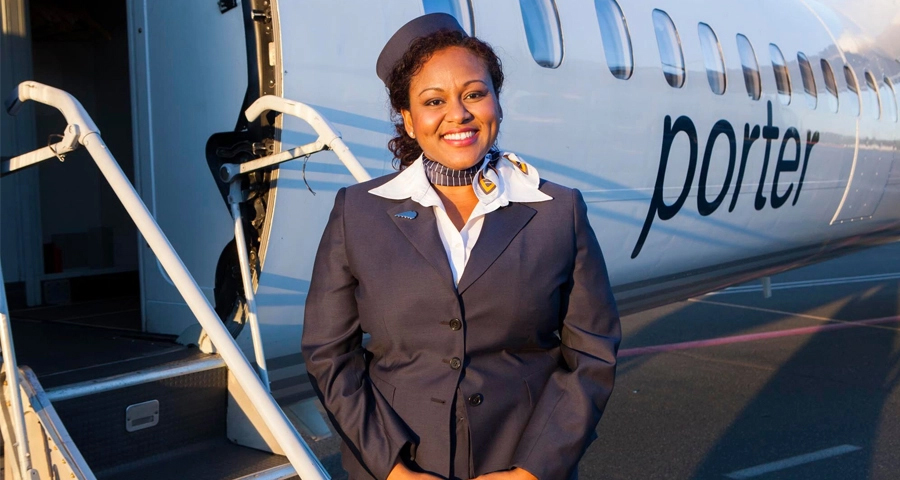
Porter Airlines has built a legitimate reputation as Canada’s most passenger-friendly economy carrier. No middle seats, free snacks, free beer and wine, and complimentary Wi-Fi on every Embraer E195-E2 flight, it’s a genuinely elevated experience compared to Air Canada or WestJet’s basic economy. But the airline is not without flaws: customer service during disruptions falls short, the mobile app is limited for international travellers, and prices can spike sharply on popular routes.
Who it’s best for: Travellers flying in and out of Toronto Billy Bishop (YTZ) or Toronto Pearson (YYZ) who want a comfortable, fuss-free economy experience and don’t mind paying a small premium over budget carriers.
Background: What Is Porter Airlines?
Porter Airlines launched in 2006, initially operating short-haul turboprop flights exclusively out of Toronto’s Billy Bishop City Airport, a small island airport minutes from downtown. For years, it was a beloved regional carrier, famous for its lounge access and understated premium touches.
That changed significantly in 2022 when Porter ordered 50 Embraer E195-E2 jets, signalling an aggressive expansion into coast-to-coast Canadian routes, US destinations, sun destinations (Mexico, Caribbean, Costa Rica), and, most recently, transatlantic routes to Europe and Africa. Today, Porter is one of the fastest-growing airlines in North America, and a genuine challenger to Air Canada and WestJet’s duopoly in the Canadian market.
Porter is certified as a 4-star airline by Skytrax and has a strong safety record with no major incidents in its operating history.
Fleet & Aircraft
Porter operates two main aircraft types:
Bombardier Dash 8-400 (Q400) The original Porter plane. A 78-seat turboprop that is still used on short-haul routes out of Billy Bishop. It’s louder than a jet, and the overhead bins are small — larger bags are gate-checked to the hold. That said, the 2×2 seating configuration means no middle seats, a hallmark of the Porter experience. Wi-Fi is not available on the Dash 8 fleet.
Embraer E195-E2 Porter’s modern jet workhorse. This aircraft is the reason Porter’s reputation has grown so quickly. It features a 2×2 seating layout (zero middle seats across the entire cabin), a modern interior, complimentary high-speed Wi-Fi via ViaSat, and in-seat power outlets. Legroom is genuinely generous in economy. These jets serve medium and long-haul routes, including transcontinental Canada, the US, Mexico, the Caribbean, and Europe.
Pro tip: When booking, check which aircraft operates your route. The E195-E2 experience is significantly better than the Dash 8 for anything over 90 minutes.
Fare Classes Explained
Porter uses a tiered fare structure under two main cabin designations: PorterClassic and PorterReserve.
PorterClassic Tiers (Economy)
| Fare | Carry-On | Checked Bag | Seat Selection | Flexibility |
|---|---|---|---|---|
| Basic | Personal item only | Pay per bag | Not included | Non-refundable |
| Standard | 1 carry-on | Pay per bag | Pay to select | Non-refundable |
| Flexible | 1 carry-on | 1 free bag | Included | Changes allowed |
| Freedom | 1 carry-on | 2 free bags | Included | Fully flexible |
There is also a PorterClassic Stretch option on some fares that gives 34 inches of legroom — a step up from the standard 30 inches.
PorterReserve (Premium Economy)
PorterReserve is Porter’s answer to business class. It isn’t a separate cabin but rather the front rows of the Embraer jet, with 36 inches of legroom and a significantly enhanced soft product. It’s included with Navigate and Ultimate fares, or can be upgraded to at check-in (typically around $60 CAD per seat, subject to availability).
PorterReserve includes:
- 36 inches of seat pitch (front of cabin)
- 2 free checked bags
- Priority check-in and boarding
- Fresh meal on flights over 2.5 hours
- Alcoholic beverages and premium snacks (same as all passengers, but with more generous service)
- Dedicated overhead bin space
One of the most widely praised aspects of PorterReserve is its value. Aviation reviewers have called it among the best premium economy redemptions available in North America, particularly when booked with Alaska Atmos Rewards points.
Cabin Experience: PorterClassic vs PorterReserve
PorterClassic (Economy)
The standout feature of Porter’s economy cabin is the 2×2 seating layout across all aircraft. No middle seats. Ever. This alone sets Porter apart from virtually every other economy cabin at a similar price point.
Standard PorterClassic seats offer 30 inches of pitch, comparable to Air Canada or WestJet economy, but the absence of a middle seat makes the overall feel noticeably more spacious.
The cabin on the E195-E2 is clean, modern, and well-maintained. Tray tables fold out cleanly. The single 120V power outlet per seat is functional, though the lack of USB-C is a minor complaint noted by frequent flyers.
PorterReserve
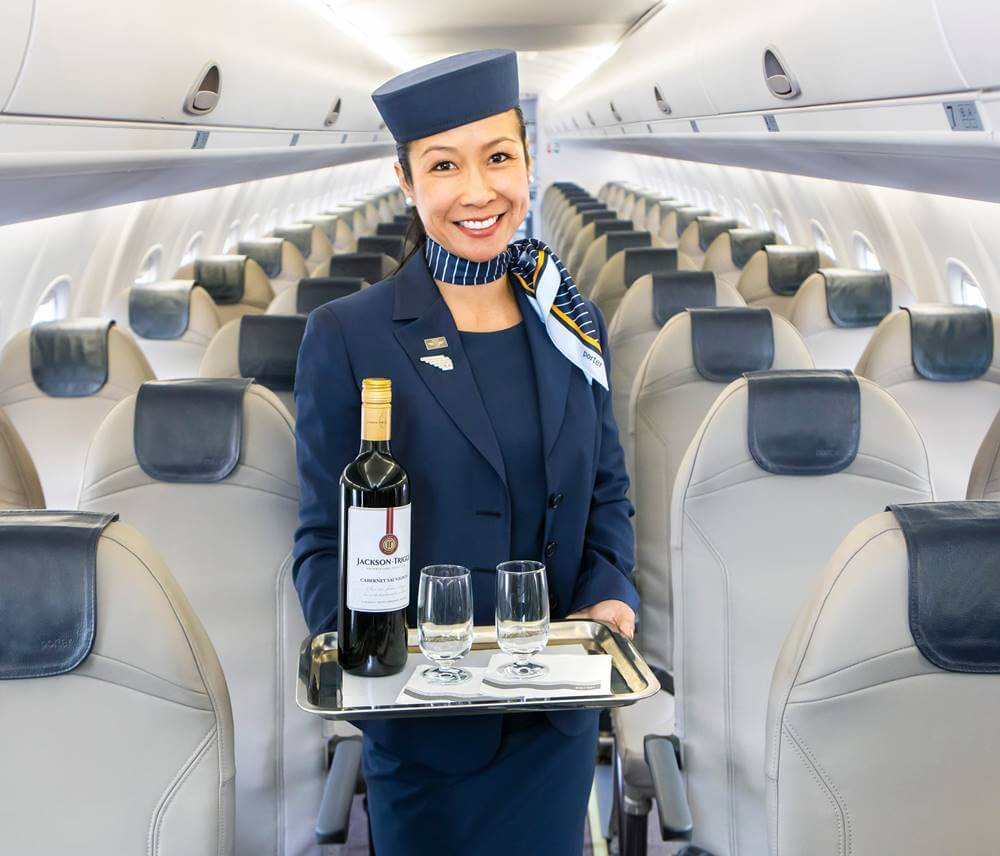
The front-of-cabin Reserve seats feature 36 inches of pitch in navy leather upholstery. Reviewers consistently describe the product as punching above its weight for what is technically still economy class. The legroom is sufficient for most passengers to stretch out, and the enhanced meal service on longer flights adds genuine value.
On short-haul routes (under 90 minutes), the difference between Classic and Reserve narrows considerably, making the upgrade less compelling unless you’re a road warrior who values priority boarding.
Baggage Policy & Fees
Porter’s baggage fees are more complex than the airline’s premium image might suggest. Here’s the practical breakdown:
Carry-On
- Personal item: Free on all fares (max 33 × 43 × 16 cm)
- Standard carry-on: Included on Standard, Flexible, and Freedom fares; costs extra on Basic (max 55 × 23 × 40 cm)
Checked Bags (Canadian, US & Sun Destinations)
| When you pay | 1st Bag (Basic/Standard) |
|---|---|
| At booking (flyporter.com) | ~$40–52 CAD |
| Post-purchase / online | ~$45–63 CAD |
| At the airport | ~$50–69 CAD |
Flexible fares include 1 free checked bag; Freedom fares include 2 free checked bags. PorterReserve fares also include 2 free checked bags.
Overweight fees: $20–25 CAD per kilogram over the 23 kg limit. Oversized bags attract a $100–115 CAD flat fee.
How to Avoid Bag Fees
- Book a Flexible or Freedom fare if you’re checking bags — the math often works out
- Hold the BMO VIPorter World Elite Mastercard for 1 free checked bag and carry-on on Basic fares
- Active and retired Canadian military members receive up to 3 free checked bags
- VIPorter elite members receive shared bag benefits for up to 8 travelling companions
In-Flight Perks: Food, Drinks & Wi-Fi
This is where Porter genuinely stands out.
Complimentary Food & Drinks
Every Porter passenger, regardless of fare class, receives complimentary beverages including alcoholic drinks (beer from Beau’s Brewing Co. and wine from Ontario’s Jackson-Triggs), along with premium snacks such as locally sourced chips, almonds, and cookies. This is included on every flight, not just certain fare types.
On flights over 2.5 hours, fresh meal items are available for purchase through PorterReserve or via the buy-on-board menu for other passengers.
The free drinks policy is one of Porter’s most effective marketing tools and a genuine differentiator in the Canadian market. It’s worth noting that Air Canada introduced complimentary drinks on domestic and US flights partly in response to Porter’s growing popularity.
Wi-Fi
Free Wi-Fi is available on all Embraer E195-E2 flights via ViaSat satellite. You need a VIPorter account to access it without watching a 30-second ad every 30 minutes. Speeds are decent for email and light browsing (around 22 Mbps download has been recorded by reviewers), though streaming can buffer on busy flights. Wi-Fi is not available on Dash 8 flights.
In-Flight Entertainment
Porter’s IFE system on the E195-E2 features a library of TV shows and movies. The content selection has received mixed reviews; some passengers note that only partial seasons of certain shows are available. It’s functional for short-to-medium haul flights but not as comprehensive as Air Canada’s system.
Routes & Destinations {#routes}
Porter has expanded rapidly from its Toronto Billy Bishop roots. As of 2026, it operates from:
Primary hubs:
- Toronto Billy Bishop (YTZ) — original hub, turboprop routes
- Toronto Pearson (YYZ) — jet routes, including all US and international
Domestic Canada: Ottawa, Montreal, Quebec City, Halifax, St. John’s, Calgary, Edmonton, Vancouver, Victoria, Winnipeg
United States: New York (LGA), Fort Lauderdale, Miami, and select eastern US cities
Sun Destinations: Cancún, Liberia (Costa Rica), and select Caribbean routes
Transatlantic (new): Paris, Lisbon — with Africa routes also under expansion
Key route note: Billy Bishop is beloved for its downtown Toronto location — it’s walkable from the financial district and a short streetcar or free shuttle bus ride from Union Station. The experience of flying out of YTZ is genuinely unique, with low-rise gates and stunning CN Tower views on takeoff. For destinations not served from YTZ (most long-haul), you’ll fly from the larger and less convenient Pearson.
Check-In & Airport Experience
Billy Bishop (YTZ): Porter’s home turf. The airport is small, calm, and efficient. Check-in staff are consistently rated as friendly. The complimentary shuttle bus runs between Union Station and the airport regularly. The airport is split into domestic and US departure sections, each compact and easy to navigate.
Toronto Pearson (YYZ): Porter operates from Terminal 3 at Pearson. The check-in and boarding experience here is rated lower by reviewers — the charm of Billy Bishop doesn’t translate to a major hub terminal.
International passengers: A notable pain point flagged across multiple reviews is that Porter’s mobile app is not available outside of Canada and the US. International travellers (from Europe, etc.) cannot download the app, which means they cannot access mobile boarding passes and must check in at the airport counter. In 2026, this is a meaningful gap for a carrier expanding transatlantic routes.
Booking on Basic fares also requires picking up a physical boarding pass at the counter unless you hold VIPorter elite status, which adds inconvenience for light packers trying to move quickly through airports.
VIPorter Loyalty Program
Porter’s loyalty program, VIPorter, has grown substantially in scope and relevance following a major 2025 overhaul that added partnerships with Air Transat and Alaska Airlines.
Earning Points
VIPorter is a revenue-based program. Members earn 5–8 points per dollar spent on Porter flights, depending on fare class. The BMO VIPorter World Elite Mastercard is the fastest way to accumulate points, offering up to 70,000 points as a welcome bonus and 2 points per dollar on Porter purchases.
Redeeming Points
Point values vary, but savvy redemptions can yield around 1.5–4 cents per point. The Air Transat partnership now allows members to book European flights for as low as 25,000 VIPorter points — significantly cheaper than equivalent Aeroplan redemptions (which run closer to 40,000 points for the same routes). The Alaska Airlines partnership opens access to over 1,000 US itineraries.
Elite Status Tiers
VIPorter has multiple elite tiers (Venture, Ascent, First) that provide benefits like priority check-in, priority boarding, complimentary seat selection, and shared companion benefits for up to 8 guests on the same booking.
How Does VIPorter Compare?
In independent assessments, VIPorter ranks above WestJet Rewards in program value and usability, particularly given the new airline partnerships. Air Canada’s Aeroplan still leads for Canadians who fly internationally across a wide range of destinations, but for frequent Porter flyers, VIPorter has become a genuinely competitive option.
On-Time Performance & Customer Service
This is where Porter’s reviews diverge most sharply.
On-time performance receives mixed ratings. Some passengers report consistent punctuality, particularly on Billy Bishop short-haul routes. Others, especially on busier Pearson routes and during peak travel periods, have experienced delays of one to five hours, with limited communication from crew or ground staff during disruptions.
Customer service during normal operations is rated highly. Flight attendants and check-in staff receive consistent praise for friendliness across review platforms, including Skytrax, TripAdvisor, and in first-hand travel blog reports.
Customer service during disruptions is a recurring weak point. Multiple verified reviews describe difficulty reaching Porter by phone (wait times exceeding 25 minutes), instances of passengers being involuntarily rebooked without notification, and inadequate compensation offers following significant delays. One widely cited case involved a passenger being rebooked onto an earlier departure that was impossible to catch due to an inbound transatlantic connection and receiving no proactive support.
Porter does not rank as poorly as some ultra-low-cost carriers in this area, but travellers on tight connections or time-sensitive itineraries should buy travel insurance and set expectations accordingly.
Porter vs Air Canada vs WestJet
| Feature | Porter | Air Canada | WestJet |
|---|---|---|---|
| No middle seats | ✅ Always | ❌ Most aircraft | ❌ Most aircraft |
| Free alcohol in economy | ✅ Yes | ✅ Domestic/US only | ❌ No |
| Free Wi-Fi | ✅ E195 routes | ❌ Paid | ❌ Paid |
| Downtown Toronto hub | ✅ Billy Bishop | ❌ Pearson only | ❌ Pearson only |
| Loyalty program value | ⭐⭐⭐⭐ | ⭐⭐⭐⭐⭐ | ⭐⭐⭐ |
| International network | Limited | Extensive | Moderate |
| Business class (lie-flat) | ❌ No | ✅ Yes | ✅ Yes |
| App (international users) | ❌ Limited | ✅ Full | ✅ Full |
| Economy pricing | Mid-range | Variable (often high) | Variable |
Bottom line: For domestic Canadian and short-haul US travel, Porter competes strongly, and often wins on comfort. For long-haul international journeys where a lie-flat business class or a deep global network matters, Air Canada remains the stronger choice. WestJet sits in the middle ground with a weaker on-board product than either.
Pros & Cons
What Porter Does Well
- No middle seats on every flight: the single most passenger-friendly policy in Canadian aviation
- Free beer, wine, and premium snacks: on every flight, every fare class
- Free Wi-Fi on E195 jets: genuinely useful for road warriors
- Billy Bishop Airport: downtown Toronto convenience is hard to beat
- PorterReserve: outstanding value for a premium economy-style experience
- Friendly cabin crew: consistently praised across review platforms
- VIPorter loyalty program: competitive with new airline partnerships
- 2-2 seating on all aircraft: even short turboprop hops have no middle seats
- Automatic seat pairing: for couples on all fares (unlike WestJet’s basic fare)
What Porter Needs to Improve
- Customer service during disruptions: communication breaks down when things go wrong
- Mobile app unavailable internationally: a real problem for transatlantic expansion
- Baggage fees on Basic and Standard fares: can erode the value proposition on short trips
- Dash 8 limitations: no Wi-Fi, small overhead bins, louder cabin
- Phone wait times: regularly exceed 20–30 minutes for customer support
- IFE content gaps: partial TV seasons, thinner content library than Air Canada
- Route network: still limited compared to Air Canada, particularly for international flights
Is Porter Airlines Worth It?
Yes — for most domestic Canadian travellers, Porter is the best economy option available.
The combination of no middle seats, complimentary drinks, free Wi-Fi on jets, and genuinely warm service creates an experience that consistently outperforms what Air Canada and WestJet deliver in economy at a comparable price point. The Billy Bishop Airport experience alone is worth something for anyone based in Toronto.
Book Porter if:
- You’re flying between major Canadian cities or to the US northeast
- You’re departing from or arriving in downtown Toronto
- You value in-flight comfort over bare-bones fares
- You want a premium experience without paying true business class prices (PorterReserve)
Look elsewhere if:
- You need a global airline network with lie-flat business class
- You’re flying internationally from outside North America and need a reliable mobile app
- You’re on a tight budget, and Basic fares with added bag fees make the price uncompetitive
- You’re flying a Dash 8 route over two hours; the jet experience doesn’t apply
Overall rating: 7.8 / 10
Frequently Asked Questions
Is Porter Airlines a safe airline?
Yes. Porter is certified as a 4-star airline by Skytrax and has an excellent safety record since its founding in 2006.
Can international passengers use Porter’s app?
Currently, Porter’s app is only available in Canadian and US app stores. Passengers from other countries cannot download it and must check in at the airport counter.
Does Porter fly to Europe?
Yes. As of 2026, Porter operates flights to Paris and Lisbon, with further transatlantic expansion underway.
Is VIPorter worth joining?
Yes, even if you fly Porter infrequently. Joining is free, and the account is required for free Wi-Fi access on E195 flights. If you fly Porter regularly, the BMO VIPorter World Elite Mastercard significantly accelerates point earning.
How does Porter compare to Flair or Swoop?
Porter is not an ultra-low-cost carrier. Flair targets pure price-sensitive travellers; Porter targets comfort-conscious travellers willing to pay slightly more for a noticeably better experience. They rarely compete head-to-head.
What is the best seat on Porter Airlines?
On the E195-E2, rows 1–9 are PorterReserve with 36 inches of pitch. For PorterClassic, exit rows and bulkhead seats offer more legroom. On the Dash 8, seats on the left side of the aircraft flying eastward out of Toronto offer the famous CN Tower view on takeoff.