
Business Travel Guide
Asiana Business Class Review: Everything a Corporate Traveler Needs to Know
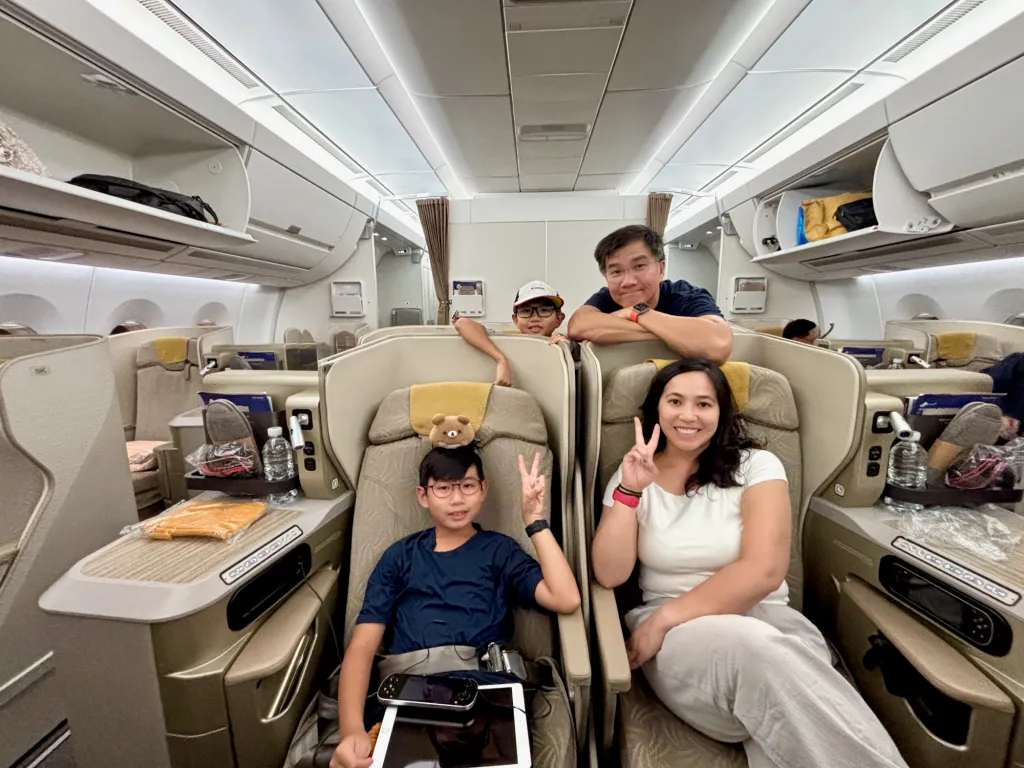
Important for travel planners: Asiana Airlines is being absorbed by Korean Air, and the Asiana brand will be phased out by December 17, 2026. This review covers what to expect now and what changes are coming for your team.
Asiana business class won’t dominate social media, but it consistently satisfies corporate travellers who know what truly matters at 35,000 feet: sleep quality, attentive service, and good food often at a price well below flashier competitors.
Who Is Asiana Business Class For?
Asiana Airlines is South Korea’s second-largest carrier, operating 90 international passenger routes with its hub at Incheon International Airport (ICN). For corporate travellers routing through Seoul to destinations across Asia, Oceania, and North America, Asiana has long offered a reliable premium product often priced below rival Korean carriers and comfortably outperforming many Western equivalents on the metrics that matter most for business travel.
That said, Asiana is at a crossroads. Following Korean Air’s acquisition in December 2024, the Asiana brand is a subsidiary scheduled for full absorption by December 17, 2026. For travel managers with Asia-Pacific programmes, now is the time to understand what Asiana offers and plan for what comes next.
Corporate Travel Scorecard
Seat & Comfort: 7.4/10
Dining: 7.7/10
Service: 8.0/10
Lounge Seoul ICN: 7.8/10
Value for Money: 7.9/10
IFE & Connectivity: 5.5/10
Overall Corporate Rating: 7.4/10
Quick Facts
- Flagship aircraft: Airbus A380-800
- Seat width: 22 inches
- Aeroplan miles (North America to Seoul): approximately 75,000 miles
- Alliance: Star Alliance (moving to SkyTeam upon merger completion)
- Brand end date: December 17, 2026
The Aircraft & Seat Options
Asiana’s business class offering varies significantly depending on which aircraft you’re booked on. For corporate travellers, ensuring you’re on a widebody long-haul aircraft is the single most important booking decision.
Airbus A380-800: Business Smartium (fully flat), 2-2-2 layout on upper deck. Best for: Los Angeles, New York, Sydney, Frankfurt.
Airbus A350-900: Business Smartium (fully flat), staggered layout with direct aisle access for all. Best for: London, San Francisco, select Asia routes.
Boeing 777-200ER: Business Smartium (fully flat), staggered 1-2-1 layout. Best for: transpacific and Europe routes.
Airbus A330-300: Angled lie-flat (not fully flat), 2-2-2 layout. Best for: regional Asia routes such as Bangkok and Tokyo.
The headline seat is the “Business Smartium”: Asiana’s fully flat bed across the A380, A350, and 777. On the A350 and 777, all passengers have direct aisle access. For solo business travellers, a window seat in these configurations offers additional storage space and privacy.
A notable upgrade is available on select A380 routes: the Business Suite, formerly First Class suites repurposed for business class, featuring sliding doors, 32-inch HD screens, and a companion seat for in-flight dining.
Business Suite passengers also access Asiana’s exclusive First Class lounge at Incheon. For senior executives or high-value client routes, this represents exceptional value.
The most consistent criticism from reviewers is the cabin aesthetic: muted beige and brown tones that feel dated compared to newer products. On the A330 regional aircraft, the angled lie-flat seats are a meaningful step down; factor this into decisions about business class on shorter regional legs.
Dining: Korean Excellence In The Air
Asiana’s food service is one of the more consistent highlights across reviewer accounts. Long-haul flights offer both a Korean menu and a Western menu, a dual approach that genuinely serves a diverse corporate clientele.
The Korean menu is where Asiana shines: dishes like bibimbap, Ssambap with Bulgogi beef, and traditional starters reflect genuine Korean culinary heritage. The Western menu is well-executed but doesn’t quite reach the level of Singapore Airlines or Japan Airlines at their best. Each seat is stocked with a full pillow, premium duvet, amenity kit, and pyjamas on overnight long-haul routes.
Pre-order options are available 48 hours before departure, a useful feature for travellers with dietary requirements. Vegetarian options on the standard menu have received mixed reviews, so a specific pre-order is worth the extra step.
Corporate travel tip: Choose the Korean menu for the most distinctive and consistently praised experience.
Service: Attentive, with Caveats
Asiana’s cabin crew is widely praised for their attentiveness. Flight attendants greet business class passengers by name, confirm special meal requests, and are consistently described as responsive. Crew is frequently noted as constantly present even on overnight flights; a standard that matters when you need something and don’t want to wait.
The caveats worth noting for international travellers: English proficiency varies among crew members, and some travellers report that communication can feel limited on certain routes. Service is warm but can tip toward formal rather than personable, depending on crew composition. Overall, it is a reliable standard consistent without being memorable.
Lounges: Excellent in Seoul, Variable Elsewhere
Asiana’s flagship lounges at Incheon International Airport are the undisputed highlight of the ground experience. Spacious, calm, and well-stocked with buffet-style dining, the Incheon lounge is a genuine perk of flying Asiana in business class. Travel managers routing teams through Seoul should factor in early arrivals to allow time there.
Outside Seoul, Asiana typically uses Star Alliance partner lounges. Quality varies significantly by airport; some partner lounges in major hubs are excellent, while others offer a considerably more modest experience.
Star Alliance Gold status also delivers priority check-in, expedited boarding, and baggage handling regardless of cabin; a useful benefit for high-frequency travellers.
Productivity and Connectivity
This is where Asiana most visibly shows its age. The in-flight entertainment system across the fleet has been consistently criticised as basic and dated, the library is limited, the interface is clunky, and screen quality on older aircraft doesn’t match modern premium expectations.
Wi-Fi is available on some aircraft, notably the A350, but is absent on some A380 routes; a significant gap for corporate travellers who need to stay productive on long-haul flights. Power supply and USB charging are reliably available at seats across the fleet.
If in-air working is a priority for your team, Asiana’s connectivity limitations are the most meaningful gap relative to competitors and should factor into route planning.
PROS AND CONS FOR CORPORATE TRAVELERS
What works:
- Fully flat beds on the A380, A350, and 777
- Excellent Korean and Western dual menus
- Attentive, professional cabin crew
- Outstanding Incheon lounges
- Competitive pricing vs. top-tier Asian carriers
- Business Suite option on select A380 routes
- Star Alliance benefits across partner airlines
- 48-hour meal pre-ordering
What to watch out for:
- IFE system is significantly dated
- Wi-Fi absent on some long-haul routes, including certain A380 services
- Cabin aesthetic feels old-fashioned
- Limited privacy compared to newer suites (Qatar, Delta)
- English proficiency varies among the crew
- Regional A330 routes offer angled, not flat, seats
- Brand disappearing by December 2026
Value: Competitive on the Routes That Matter
Asiana prices its business class seats below most comparable premium Asian carriers, making it a genuinely attractive option for cost-conscious corporate travel programmes.
Typical Aeroplan redemptions for North America to Seoul routes run around 75,000 miles, a competitive rate. Cash fares are route and season-dependent, but Asiana frequently undercuts Korean Air and matches or beats European long-haul carriers on comparable routes.
For teams routing regularly between North America or Europe and Asian business hubs, Seoul, Tokyo, Bangkok, Singapore via connection, Asiana’s value proposition is real and meaningful.
What the Korean Air Merger Means for Your Travel Programme
Korean Air completed its acquisition of Asiana in December 2024. The formal integration is targeted for December 17, 2026, at which point the Asiana brand, livery, and Asiana Club loyalty programme will cease to exist. All operations will move to the Korean Air brand within SkyTeam, ending Asiana’s Star Alliance membership.
Key changes already underway: Asiana moved all Incheon operations from Terminal 1 to Terminal 2 in January 2026. Lounge capacity at Incheon roughly doubled in August 2025. Korean Air opened new flagship lounges at LAX in January 2026 and JFK in June 2026
Antitrust conditions require Korean Air and Asiana to cede slots on 34 routes, including Seoul–London, Seoul–Paris, and Seoul–Frankfurt, to independent carriers. Always verify the operating carrier when booking these routes.
What this means for travel managers: If your team has accumulated Asiana Club miles, take action on redemption timelines now. And if Korean Air-routed itineraries were previously avoided for budget or loyalty reasons, the merged carrier’s expanded network and lounge investment may change that calculation from 2027 onwards.
Verdict: Book It on the Right Routes
Asiana business class in 2025 and 2026 makes the most sense on routes where the airline’s strengths align with real business needs. The A380 to Los Angeles, New York, Sydney, and Frankfurt offers the most complete premium experience. The A350 routes to London and San Francisco are strong alternatives with good seat comfort and better connectivity.
For teams where arrival quality sleep, meals, and lounge experience outweigh in-air working, Asiana delivers strong value at a competitive price. If consistent Wi-Fi and a modern entertainment system are non-negotiable, look elsewhere.
Clooper recommendation: Book on the A380 or A350 for long-haul Asia-Pacific routes, and always route through Seoul Incheon, where possible, to take advantage of the lounge. Act on Asiana Club miles before December 2026 and monitor the emerging Korean Air product for post-merger routes.
Clooper’s award-winning platform helps growing businesses book flights, track spend, and manage corporate travel worldwide from Seoul to London. Visit clooper.com to get started.